 Save
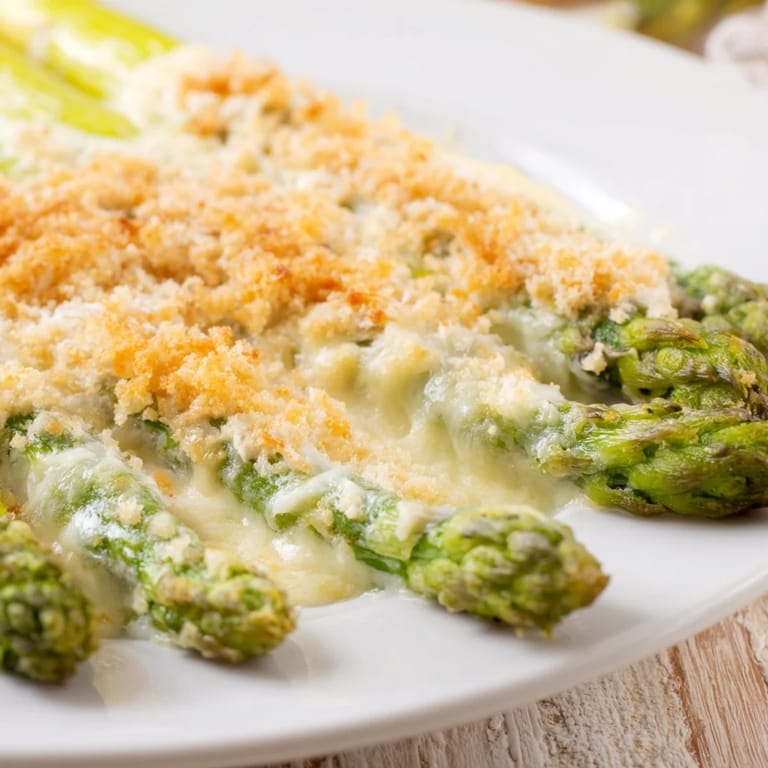
Save There's something about late spring that makes me crave vegetables treated like the main event, not an afterthought. One Sunday, while planning a casual dinner with neighbors, I realized I had a bunch of asparagus that needed rescuing from my crisper drawer. Instead of a quick side dish, I decided to bake it in a silky cheese sauce, and what came out of the oven was so golden and bubbling that it became the dish everyone talked about for weeks afterward.
My friend Julia brought a casserole dish to a potluck once, and I remember being skeptical until I tasted it—this exact dish, as it turned out. The way she described it, so casually, made me think it had to be complicated, but when she walked me through it in her kitchen, I realized the magic was just in the ratio of cream to flour and knowing when to stop whisking. Now whenever I make it, I think about that afternoon and how she'd laugh at how nervous I was about making a roux.
Ingredients
- Fresh asparagus (1 lb), trimmed: Look for stalks that snap cleanly when bent, not ones that feel woody at the base. I learned to hold them gently and let them tell you where to break them naturally.
- Unsalted butter (2 tbsp plus 1 tbsp melted): Unsalted lets you control the salt in the sauce, and it also means the butter flavor stays pure and isn't competing with anything else.
- All-purpose flour (2 tbsp): This is your thickening agent, and it needs a quick minute in the butter to cook out the raw flour taste.
- Whole milk and heavy cream (1 cup and 1/2 cup): The combination of both makes the sauce creamy without being too heavy, and the milk prevents it from breaking when you add the cheese.
- Gruyère cheese (1 cup, divided) and Parmesan (1/4 cup): Gruyère melts smooth and gives you that sophisticated flavor, while Parmesan adds a sharp edge that keeps the dish from being one-note.
- Salt, black pepper, and nutmeg (1/2 tsp, 1/4 tsp, 1/4 tsp): A whisper of nutmeg is the secret that makes people ask what's in this, even though they can't quite identify it.
- Fresh breadcrumbs (1/2 cup): Tossed in melted butter, these turn golden and crispy in the oven and give you that textural contrast that makes every bite interesting.
Tired of Takeout? 🥡
Get 10 meals you can make faster than delivery arrives. Seriously.
One email. No spam. Unsubscribe anytime.
Instructions
- Get your oven ready and set the stage:
- Preheat the oven to 400°F and lightly grease your baking dish. Having everything prepared before you start cooking means you won't be scrambling later.
- Blanch the asparagus until bright and just tender:
- Bring salted water to a rolling boil, add the asparagus, and cook for 2 to 3 minutes—you want it to snap with a light bite, not be soft. Drain it well and pat it completely dry so the sauce clings to it instead of sliding off.
- Build your base with butter and flour:
- Melt the butter over medium heat, stir in flour, and cook for about a minute while stirring constantly. This removes the raw flour flavor and creates a foundation for your sauce.
- Whisk in the milk and cream slowly:
- Pour in the milk and cream gradually while whisking, and keep whisking for about 3 to 4 minutes until the sauce thickens and coats the back of a spoon. You'll feel it happen rather than just see it.
- Fold in the cheese and seasonings:
- Remove from heat, stir in half the Gruyère and all the Parmesan, then season with salt, pepper, and a pinch of nutmeg if you're using it. Taste it before you move on—you might want a little more salt.
- Layer the asparagus and sauce in the baking dish:
- Pour the cheese sauce evenly over the asparagus, making sure every spear gets covered, then sprinkle the remaining Gruyère on top. This top layer will get golden and crispy as it bakes.
- Add the buttered breadcrumbs:
- Toss the breadcrumbs with melted butter in a small bowl until they're evenly coated, then scatter them over the top of the casserole. These will be the crown of the whole thing.
- Bake until bubbly and golden:
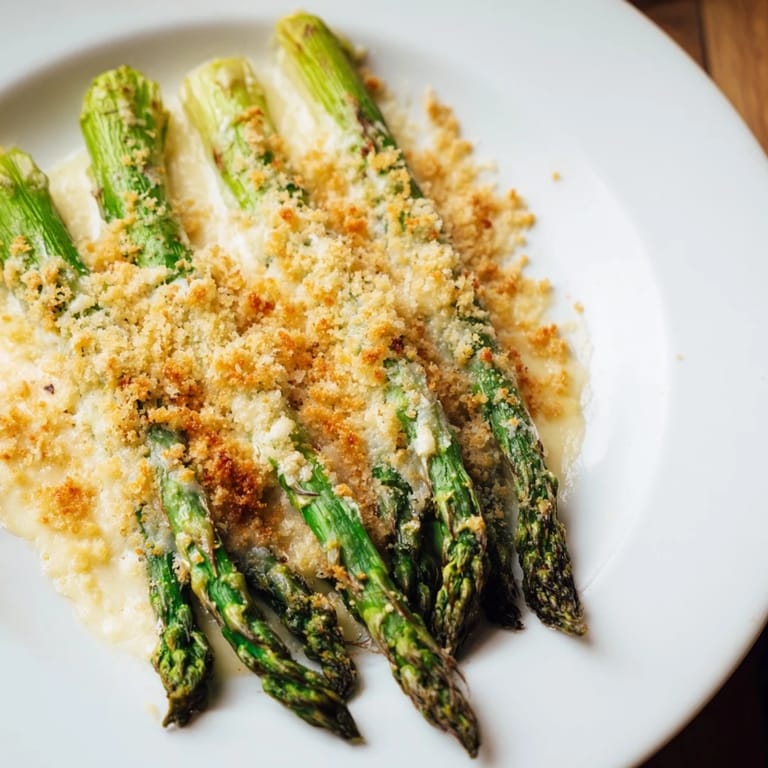
- Slide it into the oven for 20 to 25 minutes, until you see the sauce bubbling up around the edges and the top is a deep golden brown. A few dark spots on the breadcrumbs are a good sign.
- Let it rest before you serve:
- Give it 5 minutes out of the oven so the sauce can set slightly and everything melds together. This is also a good time to take a breath and admire what you just made.
 Save
Save I once made this for my mom after she'd had a rough week, and watching her face when she tasted it—she closed her eyes and actually smiled—reminded me that sometimes the simplest foods carry the most meaning. That's when a casserole stops being a recipe and becomes a way of saying you're thinking of someone.
The Roux Moment
The roux is where most people get nervous, but it's actually the easiest part once you stop overthinking it. Melt the butter, stir in the flour, cook for exactly one minute while stirring—that's it, that's the whole thing. If you cook it longer, you'll brown it slightly and it'll taste nutty; if you do it shorter, the flour taste will linger in the finished sauce. One minute is the sweet spot, and I promise you'll get it right the first time.
Variations That Work
Once you have the base sauce down, this casserole becomes a canvas. I've added crispy bacon to the breadcrumb topping, switched the cheese to sharp cheddar for a completely different character, and even stirred in some sautéed mushrooms that turned it into something almost like a vegetarian main course. The structure stays the same, but the personality changes with whatever you put into it.
Serving and Make-Ahead Tips
This is excellent served alongside roasted chicken or a simple grilled steak, but I've also served it as the main event with crusty bread and a salad, and nobody complained. You can assemble the whole thing a few hours ahead, cover it with foil, and bake it when you're ready—just add a few extra minutes to the baking time if it goes straight from the fridge to the oven. It reheats gently in a low oven without drying out, which makes it great for leftovers.
- Assemble it in the morning and bake in the evening for a hands-off dinner.
- If the top starts browning too quickly, lay a piece of foil loosely over it and uncover it in the last 5 minutes.
- Leftovers are honestly delicious cold the next day, like a savory bread pudding.
 Save
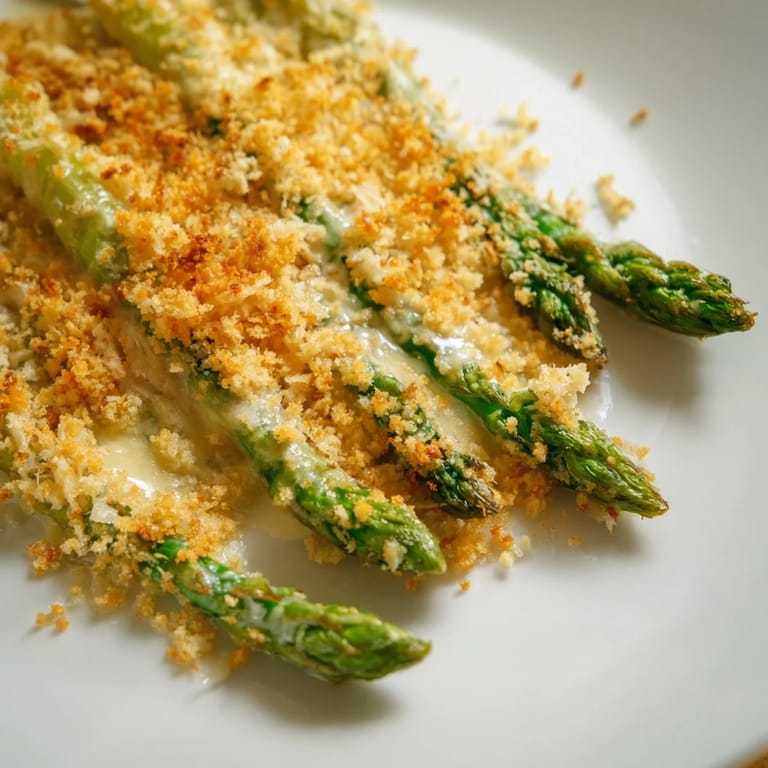
Save This casserole has become the dish I make when I want something that feels both comforting and elegant, which is harder to find than you'd think. It reminds me that good food doesn't have to be complicated to be memorable.
Recipe FAQs
- → How do I prepare the asparagus for this dish?
Trim and blanch the asparagus in boiling salted water for 2-3 minutes until just tender and vibrant green, then drain and dry before baking.
- → What cheeses work best for the sauce and topping?
Gruyère and Parmesan provide creamy melt and sharpness, but Swiss, mozzarella, or cheddar can be used as alternatives.
- → Can I make this casserole ahead of time?
Yes, assemble and refrigerate it before baking, then bake fresh when ready to serve for best texture and flavor.
- → What gives the casserole its golden crust?
A mixture of fresh breadcrumbs tossed with melted butter creates the crispy, golden topping during baking.
- → Are there any seasoning tips to enhance flavor?
Adding a pinch of nutmeg or garlic powder to the sauce and mixing chopped chives into the topping can add subtle depth.