 Save
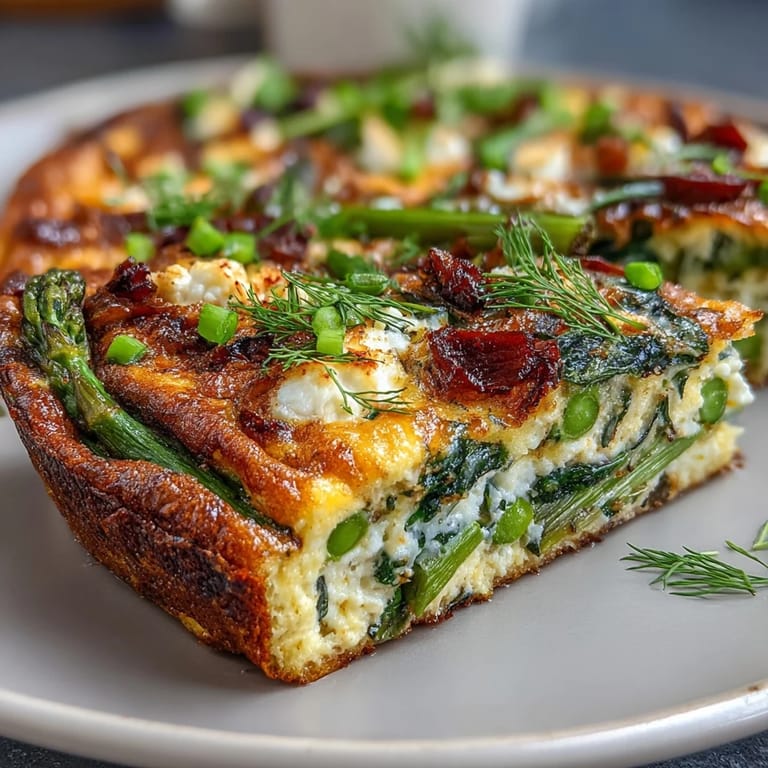
Save The scent of asparagus always signals spring in my kitchen, and this frittata is how I let the season in. I remember one breezy morning when I first decided to try peas and goat cheese together—their flavors just seemed to belong. The soft murmur of the eggs whisking and the promise of green vegetables always wakes me up gently, especially when sunlight pours across the counters. Sometimes, the urge for something vibrant for brunch leads me to reach for whatever crisp and tender vegetables are fresh, which is how this recipe became a ritual after farmers' market Saturdays. If you have ever hesitated to combine herbs and eggs, their fragrance here might win you over.
It was last May when I cooked this for brunch with friends, their laughter punctuated by the sizzle of onions in butter. We chatted about garden plans as peas rolled onto cutting boards and spinach softened in the heat. Watching everyone sneak tastes of warm frittata bits before serving made it feel less like hosting and more like sharing a secret delight. That day, the frittata vanished before I knew it, even with salad and bread on the side. It turned a plain Saturday into spring's welcoming party.
Ingredients
- Asparagus: Fresh, crisp stalks create the backbone of the frittata—a quick sauté keeps their bite, and trimming right at the woody end makes all the difference.
- Peas: Sweet and vibrant, peas should be tossed in while still cold for their gentle pop; frozen work well if fresh are out of season.
- Baby Spinach: Roughly chopping ensures even bites without stray strings, and wilting gently keeps the color bright.
- Spring Onions: Thin slices spread their mild onion flavor like dots throughout, and they soften softly when sautéed.
- Eggs: Whisking until bubbles form guarantees a fluffy, tender frittata rather than a dense one.
- Whole Milk or Cream: Adds lushness to the eggs, and cream makes the texture especially silky—milk is perfect for a lighter touch.
- Goat Cheese: Crumble over the top just before baking for pockets of tang and creaminess; use fresh, soft goat cheese for best texture.
- Unsalted Butter: Melting the butter slowly is key for a golden edge and a gentle flavor foundation.
- Fresh Chives: Their mild, grassy flavor ties the spring vegetables together and chopped chives sprinkle evenly.
- Fresh Dill or Parsley: Pick whichever herb you like—dill gives a piquant note, parsley keeps things clean and green.
- Salt and Freshly Ground Black Pepper: Season generously, especially before baking, to make all the vegetables shine.
Tired of Takeout? 🥡
Get 10 meals you can make faster than delivery arrives. Seriously.
One email. No spam. Unsubscribe anytime.
Instructions
- Preheat Your Oven:
- Set the oven to 375°F (190°C) and let it warm while gathering your ingredients—it makes the kitchen feel ready for action.
- Sauté the Veggies:
- In your oven-safe skillet, melt butter until foamy, then toss in asparagus for a couple of minutes, followed by peas and sliced onions. Let them sizzle until bright and just tender; spinach goes in last until wilted and emerald green.
- Whisk It All Together:
- Combine eggs, milk or cream, chives, dill or parsley, salt, and pepper in a mixing bowl and whisk until light and well mixed—a tiny taste for seasoning helps.
- Layer and Cook:
- Pour the egg mixture over veggies, letting everything settle evenly. Cook without stirring for 3–4 minutes—watch for setting at the edges, while the center remains a little wobbly.
- Goat Cheese Topping:
- Scatter goat cheese crumbles gently across the surface so every bite gets a creamy surprise.
- Bake to Perfection:
- Transfer skillet to the oven and bake for 10–12 minutes; the frittata should puff and set just at the center, where it still yields slightly when pressed.
- Rest and Serve:
- Remove from oven and let cool for five minutes. Slice into wedges and serve warm, or let stand for room temperature if preferred.
 Save
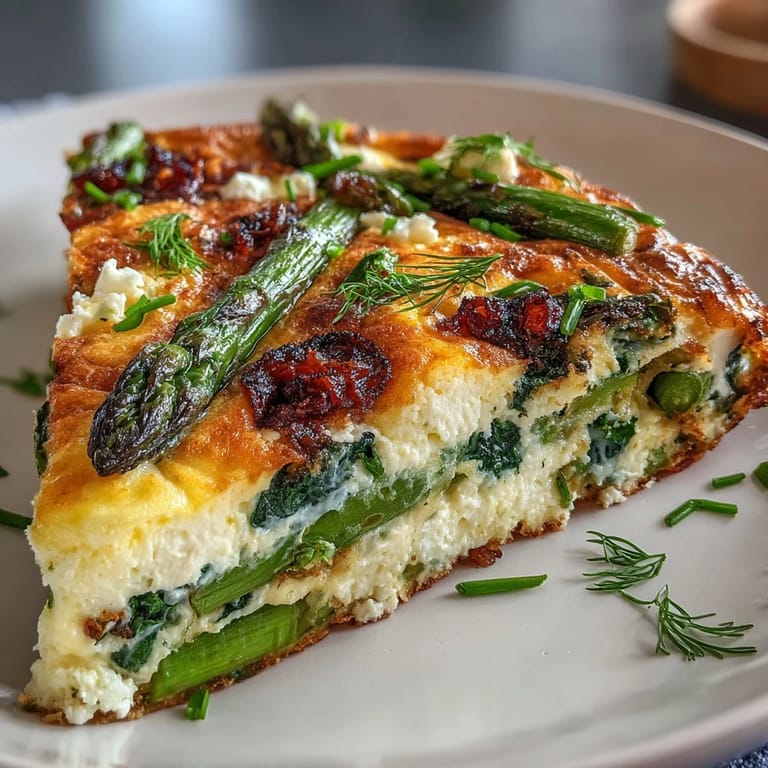
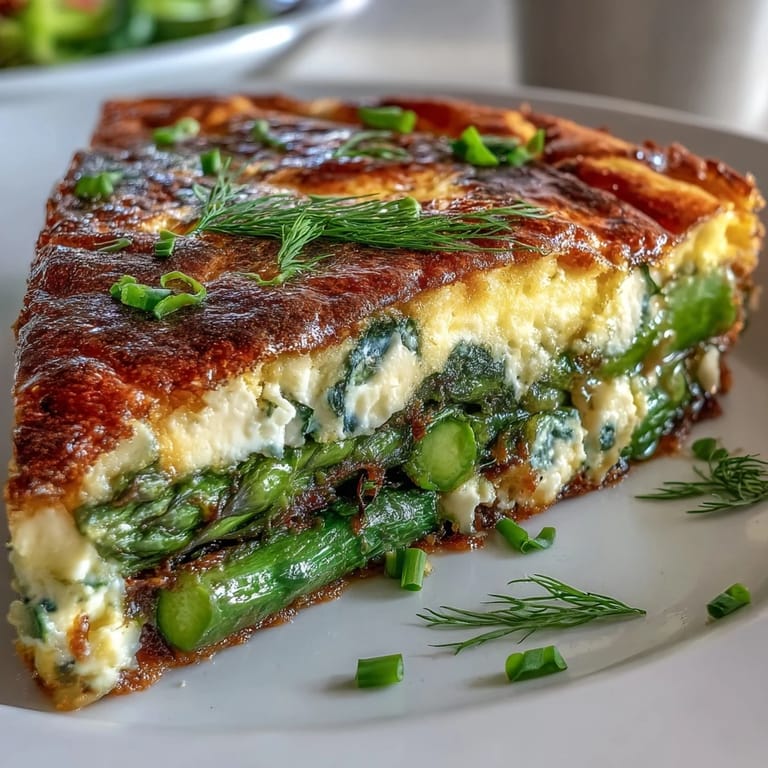
Save As everyone gathered around the table and leaned in for seconds, the frittata’s golden aroma settled over us like sunshine. In that moment, it wasn’t just breakfast—it started conversations about favorite vegetables and inspired a plan for next week’s meal together.
How to Make It Your Own
When I first tried this recipe, I swapped in zucchini slices and their buttery flavor mingled beautifully with goat cheese and peas. Adding more herbs—like tarragon—lifted the brightness, giving each bite a little something unexpected. Even tossing in leftover roasted veggies from the night before keeps the frittata interesting without any waste.
Perfect Pairings for Spring
A crisp green salad tossed with lemon vinaigrette feels just right next to the frittata. Sometimes I pour sparkling water with lemon or a chilled Sauvignon Blanc, and the freshness matches the meal perfectly. The bread helps mop up the last tender bits.
Troubleshooting and Last Touches
Don’t worry if the frittata sticks a little—let it rest, and slices will lift easier. Sometimes veggies release water, so draining spinach or patting asparagus dry is key before sautéing. Even if the frittata puffs unevenly, the flavor won’t mind.
- Double-check your oven-safe skillet before starting so the transition from stovetop to oven goes smoothly.
- If substituting veggies, adjust sauté times for firmer or softer varieties.
- Letting it cool for five minutes helps the cheese settle and keeps slices neat.
 Save
Save However you serve it, this frittata brings sunshine to the table—even on rainy spring days. I hope you find your own favorite version and share it with someone hungry for a bright meal.
Recipe FAQs
- → Can I use frozen peas instead of fresh?
Yes, frozen peas can be used. Add them directly to the skillet without thawing for best color and flavor.
- → What herbs work best in the frittata?
Fresh chives, dill, or parsley complement spring vegetables, but you can substitute with basil or tarragon for variation.
- → Is the dish suitable for gluten-free diets?
Yes, the frittata is naturally gluten-free. Just verify your cheese and butter are gluten-free.
- → Can I make this dairy-free?
Absolutely. Replace milk with plant-based alternatives and omit or substitute goat cheese with vegan cheese.
- → How do I serve the frittata?
Slice it and serve warm or at room temperature. Great with salad, bread, and a crisp beverage.
- → What tools are needed for preparation?
You will need an oven-safe nonstick skillet, mixing bowl, whisk, knife, cutting board, and spatula.