 Save
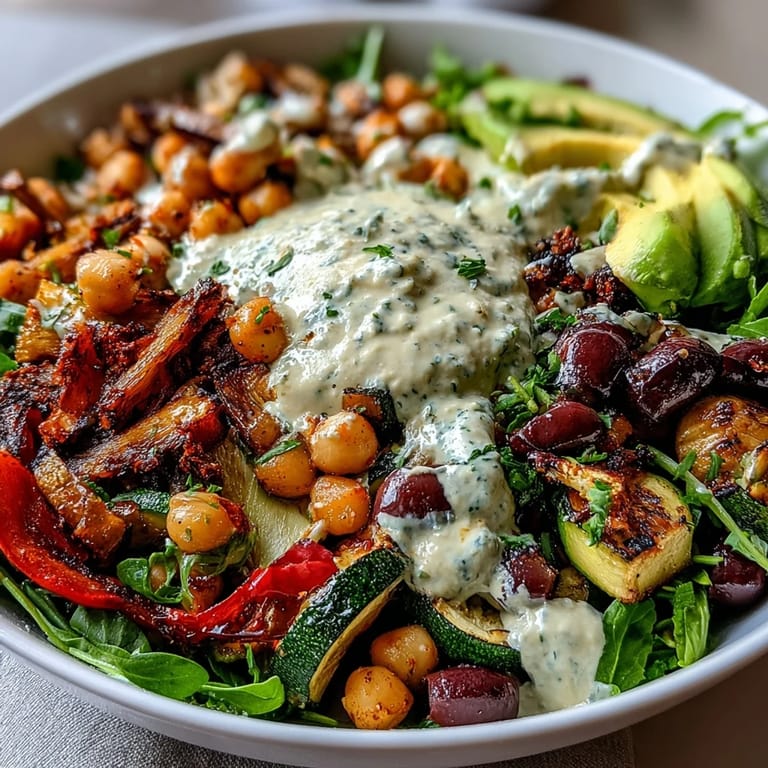
Save There's something about assembling a Buddha bowl that feels less like cooking and more like arranging your thoughts on a plate. My kitchen was flooded with late afternoon sun when I first threw together this Mediterranean version, moving from one ingredient to the next without much of a plan, just following the colors and textures that called to me. The chickpeas were already in my pantry, the vegetables needed rescuing from the crisper drawer, and suddenly I had something that tasted like a Greek island without ever leaving home. What struck me most wasn't the elegance of it all—it was how alive the bowl felt, how every component held its own but somehow made the others taste better.
I made these bowls for a friend who'd just gone vegan, and I remember her surprise when she realized nothing was missing, nothing felt compromised. The hummus was this creamy anchor, the roasted vegetables had deepened into something almost meaty with their caramelization, and the tahini dressing tied everything together with a warm, nutty richness that made everyone at the table slow down and actually taste what they were eating.
Ingredients
- Mixed salad greens (arugula, spinach, or romaine): These are your foundation, so choose leaves you genuinely enjoy eating; they're going to be the base of every bite.
- Cooked chickpeas: Canned work perfectly fine—just rinse them well under cold water to remove excess sodium and make them lighter on the palate.
- Zucchini, red bell pepper, red onion, and eggplant: The vegetables are where the magic happens; roasting caramelizes their edges and concentrates their natural sweetness into something irresistible.
- Olive oil: Don't skimp here; use something you'd actually taste, because it matters in both the roasting and the dressing.
- Dried oregano and smoked paprika: These two spices are what make the vegetables taste Mediterranean rather than just roasted; the smokiness adds depth you can't replicate.
- Tahini: This nutty, creamy paste becomes the heart of your dressing; look for pure sesame tahini without additives.
- Lemon juice: Squeeze fresh lemons if you possibly can; bottled juice changes the brightness entirely.
- Avocado: Choose one that yields slightly to pressure; it should be ripe enough to slice cleanly but firm enough to hold its shape on the plate.
- Kalamata olives: Their briny intensity is non-negotiable; they're the little wake-up calls that make every spoonful interesting.
- Hummus: Homemade is wonderful, but store-bought is honest and saves you time; choose whichever makes you want to actually eat the bowl.
Tired of Takeout? 🥡
Get 10 meals you can make faster than delivery arrives. Seriously.
One email. No spam. Unsubscribe anytime.
Instructions
- Heat your oven and prepare for magic:
- Preheat to 425°F and line a baking sheet with parchment paper if you have it (less cleanup, cleaner roasting).
- Toss your vegetables with intention:
- In a large bowl, combine your diced and chopped vegetables with olive oil, oregano, smoked paprika, salt, and pepper; make sure every piece gets coated, because the oil and spices are what create those caramelized edges.
- Roast until the edges sing:
- Spread everything in a single layer and roast for 25 to 30 minutes, stirring halfway through; you're looking for the edges to deepen in color and the vegetables to soften enough to yield gently to a fork. This is when your kitchen will smell absolutely extraordinary.
- Build your dressing while you wait:
- Whisk together tahini, fresh lemon juice, minced garlic, cumin, and salt in a small bowl, then add water a tablespoon at a time until the dressing reaches a consistency you can drizzle; it should be creamy but pourable, not thick like peanut butter.
- Assemble with care:
- Divide your greens among four bowls, then layer on the warm roasted vegetables, chickpeas, sliced avocado, olives, and a generous dollop of hummus in whatever pattern feels right. The bowl is your canvas, and there's no wrong way to arrange it.
- Finish with the dressing:
- Just before serving, drizzle the tahini dressing over everything, letting it pool slightly in the crevices and coat the greens; taste one bite before serving to make sure the salt is right for you.
 Save
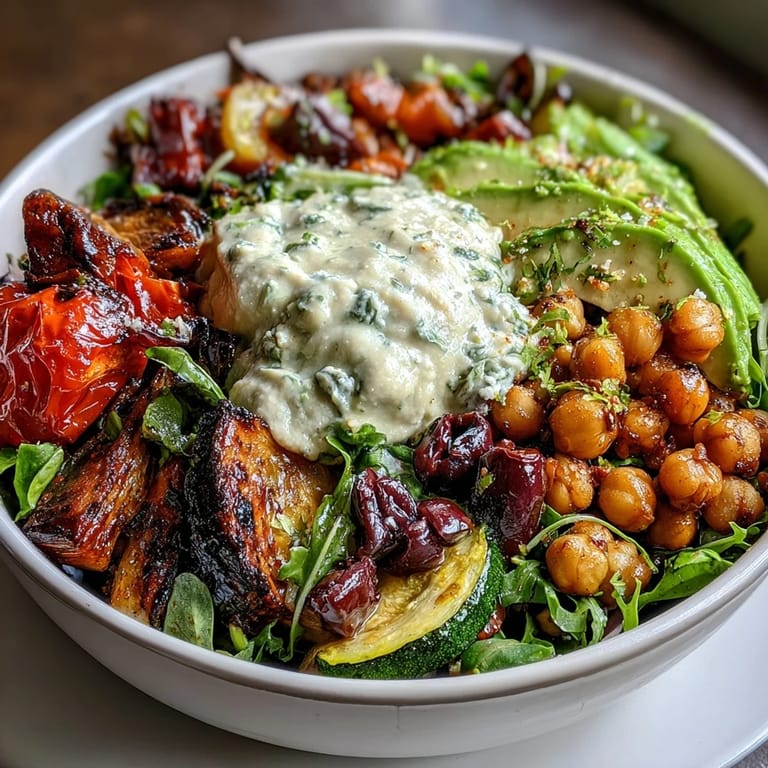
Save There was an evening when my partner took one bite and said, 'This tastes like we're doing something right,' and that stuck with me. It wasn't the complexity of flavors or the effort involved; it was the sense that we were nourishing ourselves thoughtfully, eating food that respected both our values and our appetites.
Why The Roasting Method Matters
Roasting vegetables at high heat transforms them in a way that raw or lightly sautéed never quite achieve. The edges caramelize, the natural sugars concentrate, and what emerges is something with genuine depth and character. I learned this the hard way after years of throwing raw vegetables into bowls and wondering why they tasted a bit flat. The 30 minutes in the oven isn't wasted time; it's the secret that makes this bowl sing instead of just sitting there looking pretty.
Building Flavor Through Layering
Each component of this bowl plays a specific role, and the magic happens when you stop thinking of them as separate ingredients and start thinking of them as a conversation. The earthiness of the chickpeas softens the brightness of the lemon dressing; the buttery avocado balances the briny olives; the creamy hummus quiets the smokiness of the roasted vegetables. It's architecture, really, and once you understand how these flavors talk to each other, you'll find yourself making variations without even thinking about it.
Adaptations and Endless Possibilities
The beauty of a Buddha bowl is that it's a framework, not a formula. I've made this with leftover roasted sweet potatoes when I didn't have eggplant, stirred in quinoa for extra heartiness on hungry days, and swapped chickpeas for white beans when that's what I had on hand. The core stays the same—your greens, your protein, your vegetables, and that tahini dressing—but the details bend to whatever your kitchen holds and whatever your body is asking for.
- Try adding cooked quinoa, brown rice, or farro for extra substance and staying power.
- Swap the chickpeas for white beans, black beans, or cooked lentils depending on what you're craving.
- Finish with toasted pine nuts, pumpkin seeds, or sunflower seeds for a textural surprise that keeps every bite interesting.
 Save
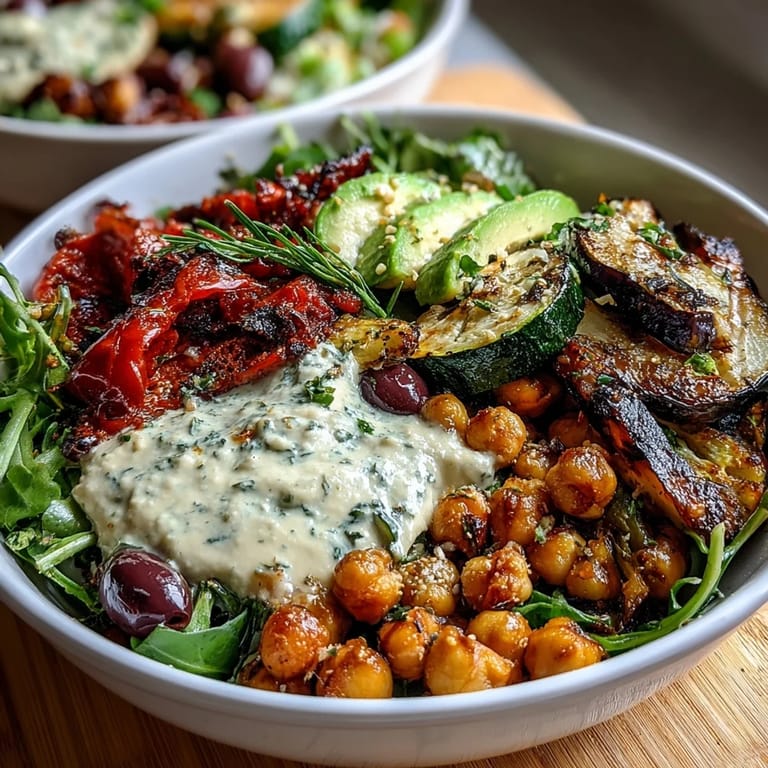
Save This bowl has become my refuge on days when I need to feel grounded and nourished without fuss. It's the kind of meal that respects your time and rewards your attention in equal measure.
Recipe FAQs
- → Can I substitute chickpeas with other proteins?
Yes, white beans or lentils can be used as alternatives to chickpeas, offering similar texture and protein content.
- → How do I make the tahini dressing less thick?
Add more water, a tablespoon at a time, and whisk until you reach your desired pourable consistency.
- → Can I add grains to this bowl?
Cooked quinoa or brown rice can be included for extra heartiness and texture.
- → What are good toppings to add crunch?
Toasted pine nuts or pumpkin seeds provide a satisfying crunchy element.
- → Is this dish suitable for a gluten-free diet?
Yes, all ingredients are naturally gluten-free, but always check packaged items for cross-contamination.
- → How do I roast the vegetables evenly?
Toss vegetables halfway through roasting to ensure even caramelization and tenderness.