 Save
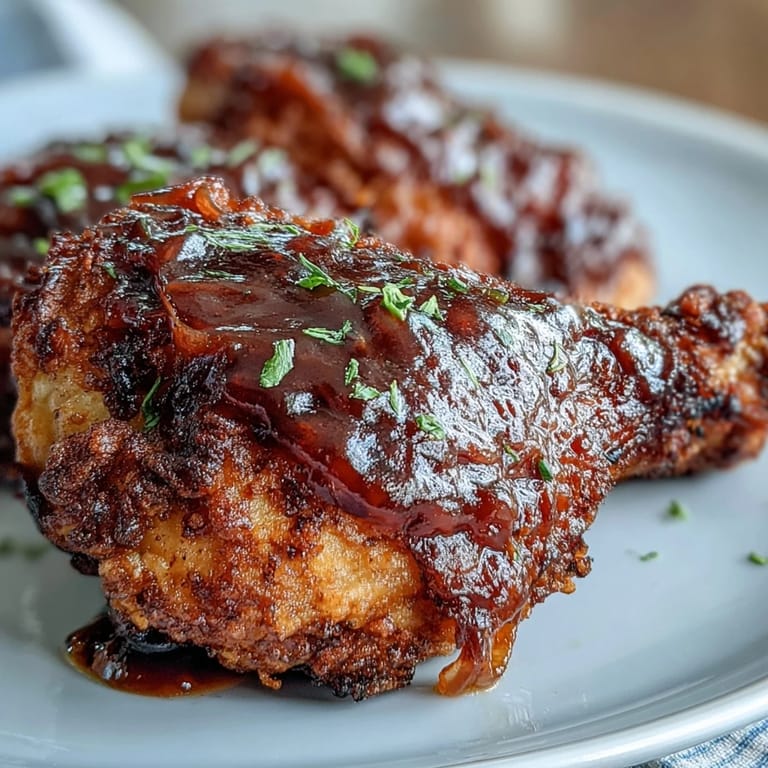
Save My grandmother's kitchen smelled like caramelized onions and cast iron on Sunday afternoons, and that's where I first understood what smothered chicken really meant. It wasn't just food on a plate—it was the sound of chicken sizzling, the way steam rose off that rich gravy, and how everyone at the table got quiet the moment their fork hit the meat. Years later, I realized the magic wasn't in doing anything fancy; it was in the patience of letting onions become golden, letting that flour bloom just right, and giving the chicken time to braise in something that tasted like home. This dish has shown up at my table during celebrations, comfort moments, and days when I needed to feed people something that made sense.
I made this for my neighbor after her surgery, and she called me the next week just to tell me she'd heated up the leftovers and cried a little while eating. That's the moment I knew this recipe was doing more than filling stomachs—it was doing the work that food is supposed to do.
Ingredients
- Bone-in, skin-on chicken thighs and drumsticks: These cuts stay moist during the long braise, and the skin gets golden brown in the pan—don't skip that step for texture.
- All-purpose flour: You'll use it twice: once for dredging and again to thicken the gravy, so don't wash out the bowl too eagerly.
- Vegetable oil: Keep it at a steady medium heat; too hot and the coating burns before the chicken cooks through, too cool and it absorbs oil instead of crisping.
- Large yellow onions, thinly sliced: The thickness matters because thin slices melt into the gravy while thick chunks stay too firm; aim for just wider than a dime.
- Chicken broth: Low-sodium lets you taste the actual onions and seasoning instead of salt coating everything.
- Unsalted butter: This finishes the gravy with richness that cuts through the savory depth without making it heavy.
- Dried thyme, paprika, garlic powder, onion powder: These seem simple until they hit warm oil and release their flavor—don't skip seasoning the raw chicken first.
Tired of Takeout? 🥡
Get 10 meals you can make faster than delivery arrives. Seriously.
One email. No spam. Unsubscribe anytime.
Instructions
- Dry and season the chicken:
- Pat your chicken dry with paper towels because moisture is the enemy of golden skin. Season generously on both sides—the chicken will absorb those flavors as it cooks, and any seasoning left behind is wasted.
- Prepare your breading station:
- Mix flour with salt and pepper in a shallow bowl, then dredge each piece, shaking off excess so you have a light coating, not a crust. Save what's left in the bowl because that flour is about to become the base of your gravy.
- Fry the chicken until it's golden:
- Heat oil until it shimmers and just barely smokes, then place chicken skin-side down without moving it—let it sit for a full 6 to 8 minutes so the skin renders and browns. Flip carefully and cook the other side until golden, about the same time, then remove to a plate.
- Build the gravy foundation with onions:
- Pour off most of the oil, leaving just 2 tablespoons with all those brown bits stuck to the bottom. Add your sliced onions and let them cook slowly, stirring every minute or so, until they collapse into soft, golden strands—this takes 8 to 10 minutes and is worth every second of waiting.
- Make a roux:
- Sprinkle that reserved flour over the onions and stir constantly for a minute or two until it smells nutty and toasted. This cooks out the raw flour taste and thickens everything that comes next.
- Whisk in the broth carefully:
- Pour the broth in slowly while whisking so you don't end up with lumpy gravy—scrape the bottom of the pan as you go to lift up all those caramelized bits. The gravy should look silky and coat the back of a spoon.
- Return chicken and braise gently:
- Nestle the chicken back into the gravy, spoon some over the top, cover, and let it simmer on low heat for 25 to 30 minutes until the chicken is so tender it practically falls off the bone. Check it halfway through and give everything a gentle stir.
 Save
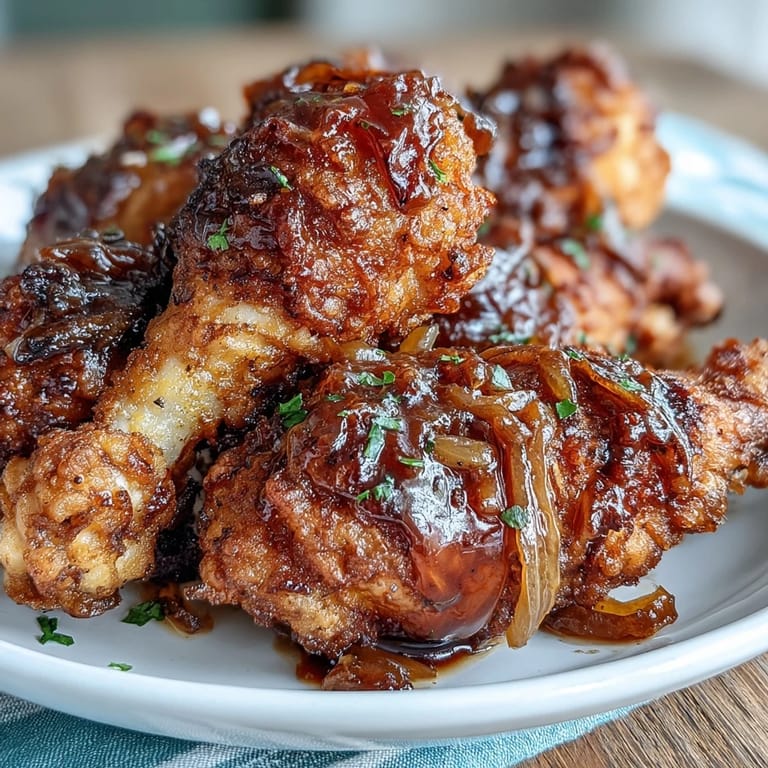
Save There's a moment right before you cover that skillet when the smell hits you—onions and chicken and thyme all colliding in the steam—and you know you've done something right. That's when people walking through the kitchen start appearing without being asked, drawn by something they can't name but absolutely recognize.
What Makes This Chicken Different
Most fried chicken recipes stop after the frying, but smothered chicken understands that the real work happens in the braising. The meat keeps cooking, keeps absorbing flavor, and the longer it sits in that gravy, the better it gets. By the time you serve it, the chicken and gravy have become a single thing—you can't separate them anymore, and you wouldn't want to.
The Onion Gravy Secret
People think gravy is complicated, but it's just patience and three ingredients: fat, flour, and liquid. The onions are doing the heavy lifting here because they're slowly caramelizing and breaking down, adding natural sweetness and body that no amount of seasoning can replicate. Once the onions are golden, everything else is just finishing touches.
Serving and Storing
Serve this hot, spooned generously over mashed potatoes or rice so you don't waste a drop of that gravy. Leftovers reheat beautifully in a covered skillet on low heat, and honestly, the flavors deepen and blend the next day in a way that makes you grateful for extras.
- Pair it with buttered collard greens or a simple green salad to cut through the richness without competing for attention.
- If you're making this ahead, refrigerate it completely before reheating so the fat solidifies and you can skim some off if you want a lighter version.
- This feeds four people generously, but it doubles easily if you're feeding a crowd—just use a larger skillet and give the gravy an extra minute to thicken.
 Save
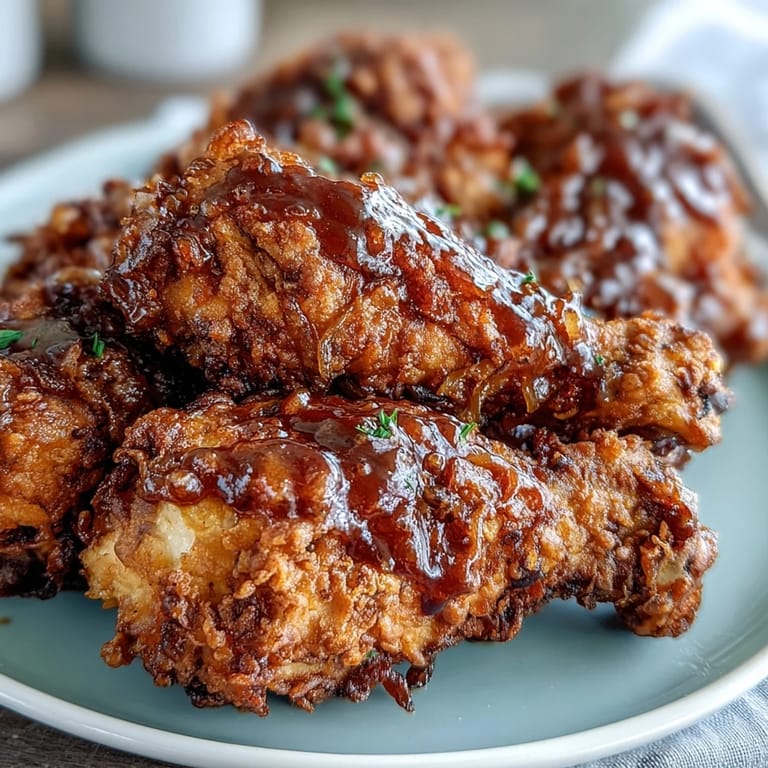
Save This is the kind of dish that teaches you something every time you make it, whether it's about seasoning, patience, or why people gather around tables in the first place. Once you understand how it works, you'll find yourself making it whenever someone needs feeding or comfort or both.
Recipe FAQs
- → How do I achieve tender chicken with this method?
Season the chicken well and brown it skin-side down to lock in juices, then simmer slowly in the gravy until fully cooked and tender.
- → What gives the gravy its rich flavor?
The gravy’s depth comes from slowly caramelizing the sliced onions and incorporating chicken broth with butter and spices for a smooth, savory finish.
- → Can I use boneless chicken instead of bone-in?
Yes, boneless pieces can be used but reduce the simmering time by about 10 minutes to avoid overcooking.
- → What side dishes pair well with this dish?
Classic Southern sides like mashed potatoes, rice, or collard greens complement the rich onion gravy and tender chicken beautifully.
- → Is it necessary to fry the chicken before simmering?
Frying creates a golden crust that adds texture and flavor, helping to seal in juices before the slow simmer in gravy.