 Save
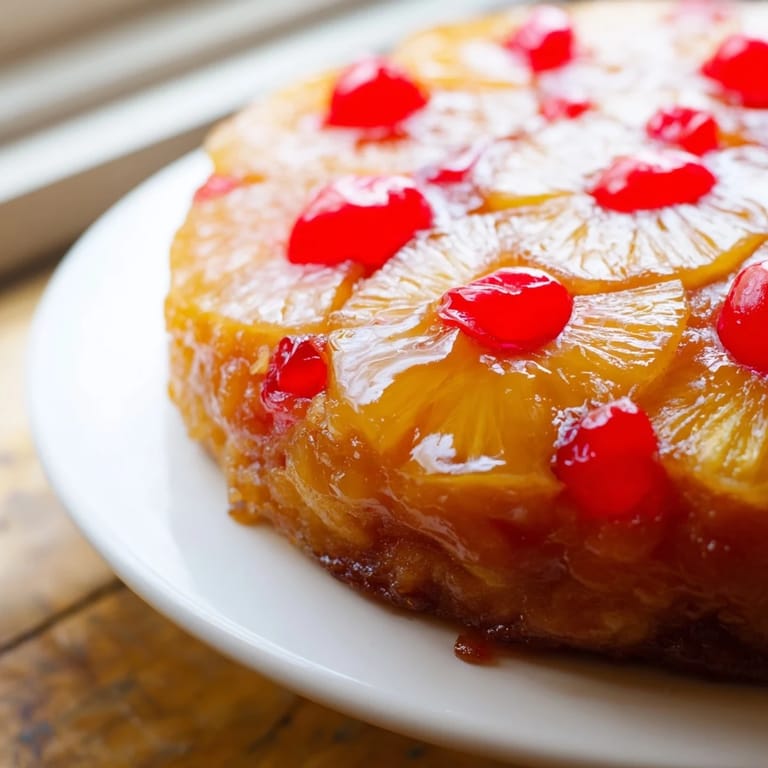
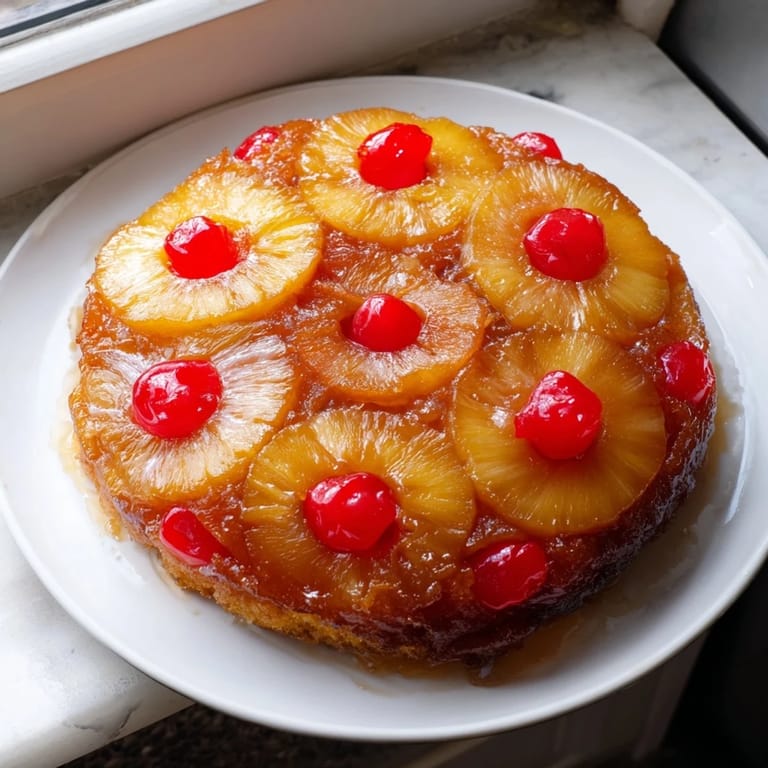
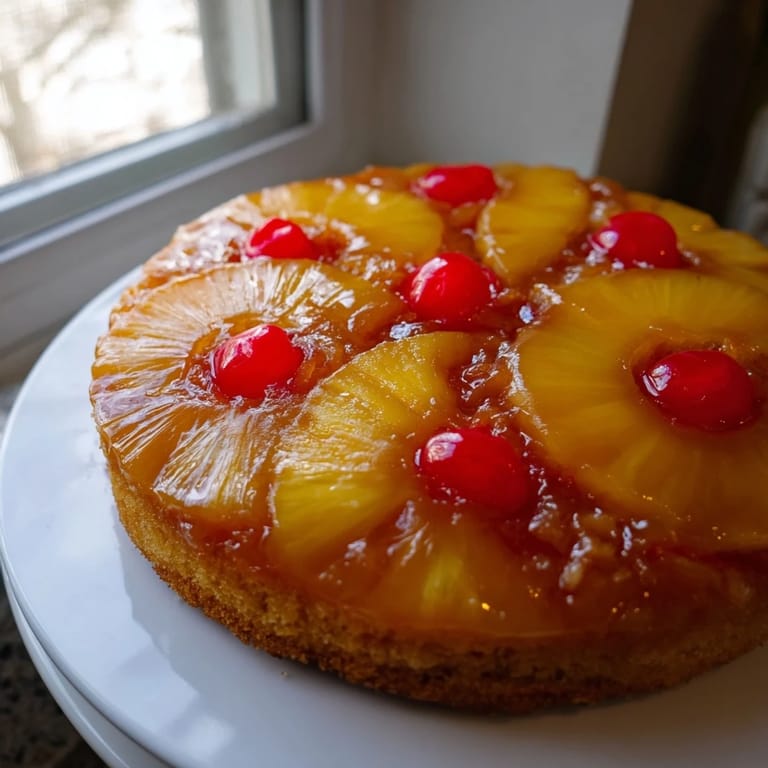
Save There's something about the smell of butter and brown sugar caramelizing in a hot oven that stops me mid-thought every single time. I discovered this cake on a rainy afternoon when my neighbor brought one over, still warm, with those glossy pineapple rings catching the light like edible stained glass. The moment I inverted it onto a plate and saw that golden, jeweled surface emerge—cherries perfectly centered in each ring—I knew I had to learn how to make it. It's become my go-to when I want something that looks fancy but feels completely unpretentious.
I made this for my daughter's birthday last summer, and I remember her face the moment I flipped that cake onto the plate—pure surprise and delight. She actually said, 'You made this?' like I'd just performed magic, which honestly, felt pretty close. Serving it warm with a dollop of whipped cream while everyone sat around the kitchen table became one of those small moments I keep replaying in my head.
Ingredients
- Unsalted butter (60 g + 120 g): The topping butter needs to be at the bottom of the pan to create that caramelized base, while the cake butter should be softened so it creams beautifully with the sugar without deflating.
- Light brown sugar (150 g): Don't skip the brown sugar for the topping—it has molasses that white sugar doesn't, and that's what gives you those deep, slightly bitter-sweet notes that make the whole thing crave-worthy.
- Pineapple rings (8–10 canned, drained): Canned pineapple works perfectly because the juice has already softened the fruit, and drainage ensures nothing gets soggy underneath the cake.
- Maraschino cherries (8–10): These sit in the center of each ring and become glossy jewels as they bake, adding both color and a touch of sweetness.
- Granulated sugar (200 g): This sweetens the cake itself without the molasses flavor, keeping the focus on the vanilla and that caramelized topping.
- Eggs (2 large): These need to be added one at a time so each one fully incorporates, which keeps the batter smooth and helps the cake rise evenly.
- Vanilla extract (1 tsp): A small amount but crucial—it enhances the buttery flavor without announcing itself.
- All-purpose flour (190 g): Measure by spooning and leveling, not by scooping straight from the bag, which can pack the flour and make the cake dense.
- Baking powder (1 1/2 tsp): This is what gives you that tender crumb, but don't substitute it with baking soda unless you adjust the recipe.
- Salt (1/2 tsp): It balances the sweetness and brings out the vanilla flavor more clearly.
- Whole milk (120 ml): Room temperature milk mixes more smoothly into the batter than cold milk, creating a more uniform texture.
Tired of Takeout? 🥡
Get 10 meals you can make faster than delivery arrives. Seriously.
One email. No spam. Unsubscribe anytime.
Instructions
- Prep your oven and pan:
- Heat the oven to 175°C (350°F) and generously grease a 23-cm round cake pan. The pan needs to be truly non-stick because you're going to flip the whole thing upside down, and any sticking ruins the presentation.
- Create the caramelized base:
- Melt 60 g of butter and pour it evenly into the bottom of the pan, then sprinkle the brown sugar over top in an even layer. You're not mixing—just letting it sit there waiting to caramelize as the cake bakes above it.
- Arrange the fruit:
- Place each pineapple ring in a circle or pattern that pleases you, then nestle a cherry in the center of each ring. This is the part that looks the fanciest and takes about two minutes—no precision required, just a gentle hand.
- Cream the butter and sugar:
- Beat softened butter and granulated sugar together for 2–3 minutes until the mixture is light, pale, and fluffy. This aeration is what makes the cake tender, so don't skip this step or rush it.
- Add the eggs:
- Beat in one egg completely before adding the second, then add the vanilla extract. Each egg needs time to fully incorporate so the batter stays emulsified and smooth.
- Combine your dry ingredients:
- Whisk together flour, baking powder, and salt in a separate bowl. This mixes everything evenly without overworking the flour.
- Alternate and fold:
- Add the flour mixture to the batter in three parts, alternating with the milk and starting and ending with flour. Stir just until combined after each addition—overworking at this point makes the cake tough.
- Spread the batter:
- Spoon the batter carefully over the pineapple rings and smooth the top with a spatula, being gentle so you don't disturb the fruit underneath.
- Bake until golden:
- Bake for 38–42 minutes, checking around 35 minutes. The cake is done when a toothpick inserted into the center comes out clean or with just a few moist crumbs clinging to it.
- Cool and invert:
- Let the cake sit in the pan for exactly 10 minutes—long enough for the bottom to set slightly but short enough that the caramel hasn't hardened. Run a thin knife around the edges, place your serving plate on top, take a breath, and flip.
 Save
Save I learned that this cake becomes something different when you serve it slightly warm with cold whipped cream—the temperature contrast somehow makes both taste better. It's those small details that transform a recipe from 'nice' to 'memorable,' and I've found that paying attention to the little things is often what separates a good baker from a great one.
The Magic of Caramelization
The real star of this cake isn't the vanilla or the pineapple—it's that thin layer of caramel that forms between the brown sugar and the cake. As the cake bakes, the heat causes the butter and sugar to transform into something rich, slightly bitter, and deeply satisfying. I've learned that you can't rush this by baking hotter; the low-and-slow approach at 175°C ensures the caramel develops without burning the cake underneath.
Choosing and Preparing Your Pineapple
When I first made this, I tried fresh pineapple because it seemed more elegant, but the results were disappointing—the fruit released water and the cake came out soggy. Canned pineapple, which I'd initially dismissed as less fancy, actually works far better because the fruit has already been softened by the canning process and won't weep moisture into your cake. Make sure you drain it thoroughly and even pat it dry with a paper towel before arranging it in the pan.
Serving and Storage Ideas
This cake is best served the day it's made, when the caramel is still soft and the cake is tender. If you have leftovers, cover them loosely and store at room temperature for up to two days—refrigerating will make the caramel harden and the cake dry out faster.
- Serve warm with whipped cream or vanilla ice cream, and watch the ice cream melt into that caramel layer.
- You can make this a day ahead and store it covered at room temperature, then warm it gently in a low oven before serving.
- If fresh cherries bother you or you want a different flavor, pecans scattered over the brown sugar layer are a wonderful substitute.
 Save
Save Making this cake has become my quiet ritual for when I want to impress someone or simply remind myself why I love baking. There's something perfect about a dessert that looks elaborate but asks very little of you in return.
Recipe FAQs
- → How do I achieve a caramelized topping?
Melting butter with brown sugar before arranging the pineapple rings ensures a rich, caramelized base once baked.
- → Can fresh pineapple be used instead of canned?
Yes, fresh pineapple rings can be substituted for a brighter, fresher flavor and texture.
- → What is the best way to prevent sticking when inverting the cake?
Greasing the pan thoroughly and allowing the cake to cool slightly before inverting helps to release it cleanly.
- → Can I add nuts for extra texture?
Pecans or walnuts may be sprinkled over the caramel mixture before adding the batter to add crunch.
- → How should this cake be served?
Serve warm or at room temperature, optionally accompanied by whipped cream or vanilla ice cream to complement the flavors.