 Save
Save There's something about the smell of lemon zest hitting hot butter that stops me mid-morning every time. Years ago, my neighbor brought over a slice of her pound cake on a gray Tuesday, and I realized dessert didn't have to be complicated to be memorable. That one slice sparked something—I wanted to figure out how to make that dense, buttery crumb sing with citrus. Now whenever I need to feel like I've done something right in the kitchen, this is the cake I reach for.
I made this cake for my mom's book club once, and someone actually asked for the recipe before they'd finished their slice. That doesn't happen often. She served it with tea in mismatched vintage cups, and somehow that simple moment of butter and lemon felt like the whole point of knowing how to cook at all.
Ingredients
- Unsalted butter, softened (1 cup): Room temperature butter creams into air better than cold—this is where the cake gets its tender crumb.
- Granulated sugar (2 cups): This isn't just sweetness; it helps incorporate air and creates the fine, even texture.
- Large eggs, room temperature (4): Warm eggs blend smoother and add structure without breaking the batter.
- Whole milk (1/4 cup): Adds moisture and keeps the dense crumb from becoming rubbery.
- Fresh lemon juice (1/4 cup): Brightens everything—use fresh, never the bottled stuff that tastes like sadness.
- Finely grated lemon zest (2 tablespoons): The real lemon flavor lives here, not in the juice; zest the lemons before juicing them.
- All-purpose flour (2 1/2 cups): Sifted if you have the patience, though honestly I skip this and it still works.
- Baking powder (1 teaspoon): Just enough lift to keep it tender, not enough to make it cake-like fluffy.
- Salt (1/2 teaspoon): Makes the lemon louder and the butter richer.
- Powdered sugar, sifted (1 cup): For the glaze—sifting actually matters here or you'll have lumps.
- Fresh lemon juice for glaze (2-3 tablespoons): Controls the glaze consistency; start with 2 and add slowly.
Tired of Takeout? 🥡
Get 10 meals you can make faster than delivery arrives. Seriously.
One email. No spam. Unsubscribe anytime.
Instructions
- Heat your oven and prepare:
- Set your oven to 350°F and give it real time to heat up. Grease your loaf pan thoroughly or line it with parchment—this cake is dense enough to stick if you're not careful.
- Cream butter and sugar into clouds:
- Beat them together for 3 to 4 minutes until the mixture is pale, fluffy, and noticeably lighter in color. This step is doing the real work; don't rush it.
- Add eggs one by one:
- Each egg gets beaten in completely before the next one arrives. This keeps the batter smooth and prevents that broken, separated look.
- Mix the wet flavor base:
- Combine milk, lemon juice, and zest in a small bowl. The zest will float around—that's perfect.
- Whisk dry ingredients:
- Flour, baking powder, and salt go together first so they distribute evenly through the batter.
- Alternate and fold carefully:
- This is the moment that matters most. Add one third of flour, then half the milk-lemon mixture, then another third of flour, then the rest of the milk-lemon, then the last of the flour. Mix just until you don't see streaks anymore; overmixing makes it tough.
- Pour and smooth:
- Get the batter into your pan and smooth the top so it bakes evenly. A small offset spatula or the back of a spoon works fine.
- Bake until the toothpick test:
- Fifty to fifty-five minutes, depending on your oven's mood. The toothpick should come out clean or with just a crumb or two, not wet batter.
- Cool with patience:
- Let it sit in the pan for 10 minutes—this helps it hold together—then turn it out onto a cooling rack. Don't glaze until it's completely cool or the glaze will run right off.
- Make and apply the glaze:
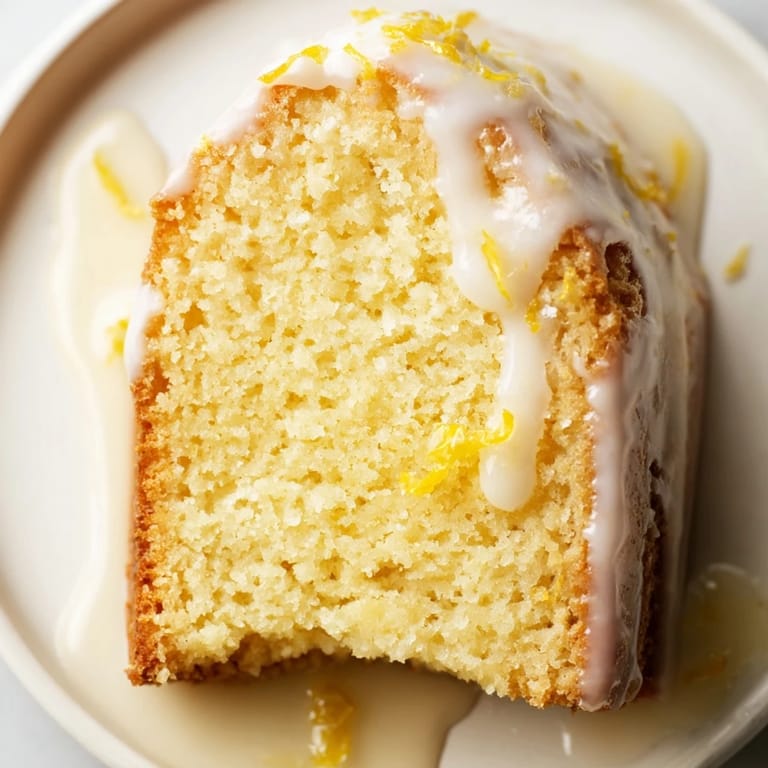
- Whisk powdered sugar and lemon juice until it's smooth and drizzle-able. It should coat a spoon without running like water. Drizzle slowly and let it find its own path down the cake.
 Save
Save The first time my daughter helped me bake this, she insisted on zesting the lemons herself, and our whole kitchen smelled like a bottled dream. She was maybe six, and watching her understand that you could make something beautiful from butter and patience felt like the whole reason we cook together at all.
The Texture That Makes It Special
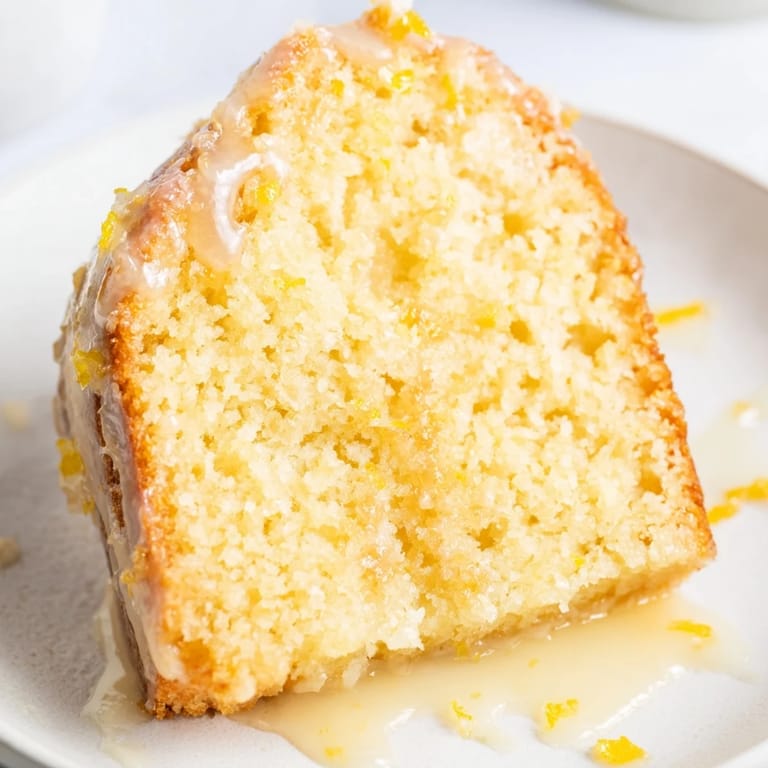
This isn't a fluffy cake, and that's exactly the point. Pound cake is meant to be dense and tender, something you can slice thin and it still holds together. The butter is what makes it work—enough fat that the crumb stays soft even after days. Some people add sour cream to amp up the moisture, and I've done that too, but the milk and lemon juice version has a cleaner flavor that lets the citrus sing without competing notes.
When to Serve It
This cake is at its best with tea or coffee, sliced thin and served at room temperature. It's also honest enough to stand alone, but I've seen people light up when it arrives with fresh berries on the side or a small dollop of whipped cream. It's the kind of cake that belongs at 3 p.m. on a quiet afternoon, not dressed up or rushed.
Variations and Experiments
Once you've made this version a few times, you might start playing. Some people add a half teaspoon of lemon extract to deepen the flavor—I do this sometimes when the lemons aren't as fragrant as I'd hoped. Others brush a simple syrup made from lemon juice and sugar into the warm cake right after it comes out of the pan; it soaks in and makes it even more moist. The base is sturdy enough to handle small changes without falling apart.
- Lemon extract adds intensity but use it sparingly—a half teaspoon is plenty, and a whole teaspoon tastes like perfume.
- Wrapped tightly, this cake stays fresh for three days at room temperature and can be frozen for up to a month if you need it later.
- Serve it at room temperature for the best flavor and texture; cold cake tastes muted.
 Save
Save This cake taught me that sometimes the simplest things—butter, sugar, eggs, lemon—are enough to make people feel cared for. Make it when you need to believe you can bake, and you'll be right.
Recipe FAQs
- → How can I enhance the lemon flavor?
Add 1/2 teaspoon of lemon extract to the batter for an extra punch of citrus aroma and taste.
- → What type of pan works best for baking this cake?
A 9x5-inch loaf pan is ideal for even baking and perfect loaf shape.
- → How do I know when the cake is fully baked?
Insert a toothpick in the center; it should come out clean or with few moist crumbs attached.
- → Can I prepare the glaze ahead of time?
Yes, whisk powdered sugar with fresh lemon juice until smooth and keep covered until ready to drizzle over cooled cake.
- → What’s the best way to store the cake?
Wrap tightly and keep at room temperature for up to 3 days to maintain freshness and moisture.