 Save
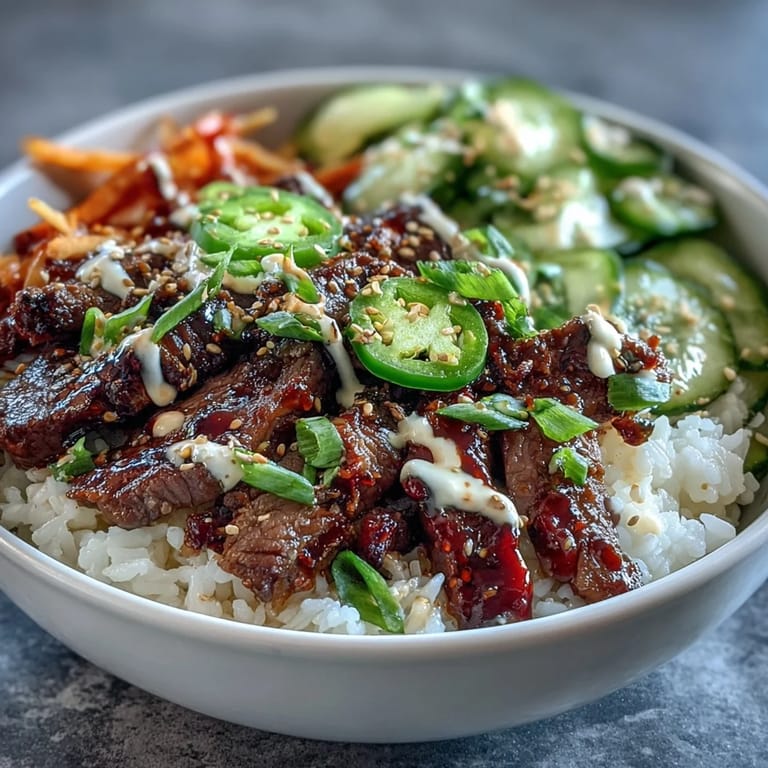
Save My friend texted me a photo of her lunch bowl one Tuesday afternoon, and I was immediately mesmerized by the arrangement of glistening beef, bright pickled carrots, and that creamy drizzle on top. She claimed it took barely longer than ordering takeout, which felt like a dare. Within the hour, I had beef marinating in my kitchen, and the smell of sesame and ginger mixing with soy sauce convinced me she was onto something real. That bowl became my secret weapon for nights when I needed something impressive but didn't have the energy for complicated cooking.
I made this for my roommate one evening when she came home exhausted from work, and watching her face change as she took that first bite was one of those small kitchen victories that stays with you. The way the warm beef played against the cool cucumber and the tangy pickled carrots seemed to shift something for her that night. She asked for the recipe before she'd even finished eating, which I took as the highest compliment.
Ingredients
- Flank steak or sirloin, thinly sliced (500 g): The thinner you slice it, the faster it cooks and the better it absorbs the marinade, so don't skip the sharp knife.
- Soy sauce (2 tbsp): This is your umami foundation, but if you need it gluten-free, swap for tamari without hesitation.
- Sesame oil (1 tbsp): A little goes a long way here, and the toasted variety gives you that warm, nutty backbone the whole bowl depends on.
- Fresh ginger, grated (1 tbsp): There's no substitute for the brightness fresh ginger brings, so avoid the jarred stuff if you can.
- Garlic, minced (2 cloves): Mince it fine so it distributes evenly through the marinade and doesn't leave harsh chunks.
- Brown sugar (1 tbsp): This balances the salty and acidic elements, creating a marinade that tastes complex rather than one-note.
- Rice vinegar (1 tbsp): Don't use regular vinegar here, as rice vinegar's gentler acidity is what makes the marinade feel rounded.
- Gochujang, optional (1 tsp): This Korean red chili paste brings heat and funkiness, but only if you want that extra layer of complexity.
- Black pepper (1/4 tsp): A small amount keeps things balanced without overpowering the other flavors.
- Jasmine or short-grain white rice, cooked (2 cups): The starch here matters because it absorbs all the flavors from the bowl and keeps everything cohesive.
- Carrots, julienned (1 cup): Cutting them thin ensures they pickle quickly and add a delicate crunch rather than resistance.
- Rice vinegar for pickling (1/3 cup): This creates the tangy backbone of your pickled carrots and takes only minutes to work its magic.
- Sugar for pickling (1 tbsp): Just enough to soften the vinegar's edge and make the carrots taste bright rather than harsh.
- Salt for pickling (1/2 tsp): This draws moisture from the carrots, making them crisp and allowing them to absorb flavor faster.
- Cucumber, thinly sliced (1 cup): Keep it cool in the fridge until the last moment, as this freshness is what balances all the warm, spiced elements.
- Fresh jalapeño, thinly sliced (1): Adjust the amount based on your heat tolerance, and remove the seeds if you prefer milder spice.
- Toasted sesame seeds (2 tbsp): Toast them yourself if you have time, as it deepens their flavor and makes a real difference in the final taste.
- Green onions, thinly sliced (2): These add a sharp, fresh note that cuts through the richness and keeps everything from feeling heavy.
- Mayonnaise (1/3 cup): Use a good quality mayo here, as it's the canvas for your sriracha sauce.
- Sriracha (1-2 tbsp): Start with 1 tablespoon and taste as you go, adding more if you want heat without overpowering.
- Lime juice (1 tsp): This small squeeze brings everything into focus and makes the sriracha taste more vibrant.
Tired of Takeout? 🥡
Get 10 meals you can make faster than delivery arrives. Seriously.
One email. No spam. Unsubscribe anytime.
Instructions
- Start with the pickled carrots early:
- Combine rice vinegar, sugar, and salt in a small bowl, then toss in your julienned carrots and let them sit while you prep everything else. They'll be tangy, crisp, and ready to go by the time you need them, and that extra time makes a real difference in how they taste.
- Build your marinade with intention:
- In a large bowl, whisk soy sauce, sesame oil, ginger, garlic, brown sugar, rice vinegar, gochujang if you're using it, and black pepper until the sugar dissolves. Add your thinly sliced beef and toss gently but thoroughly so every piece gets coated, then let it sit for 15 to 20 minutes.
- Prepare the rice properly:
- If you haven't already cooked it, do this now according to package instructions, aiming for fluffy rice that holds together but isn't mushy. Warm rice is essential because it'll absorb flavors from the toppings better.
- Make your sriracha mayo while you wait:
- Combine mayonnaise, sriracha, and lime juice in a small bowl, stirring until smooth and well blended. Taste it and adjust the heat level, remembering that it's going to spread across the whole bowl so a little goes a long way.
- Get your pan screaming hot before the beef hits:
- Heat a large skillet or wok over high heat until it's almost smoking, then add the marinated beef in a single layer. Let it sit undisturbed for 2 to 3 minutes so it develops a golden crust, then flip and cook the other side until just cooked through, about 2 minutes more.
- Assemble with confidence:
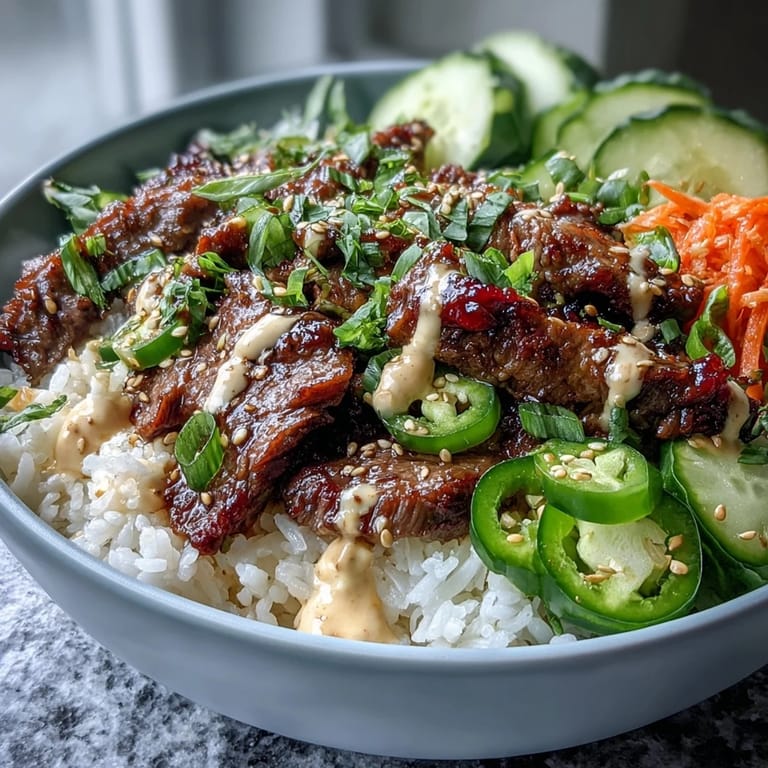
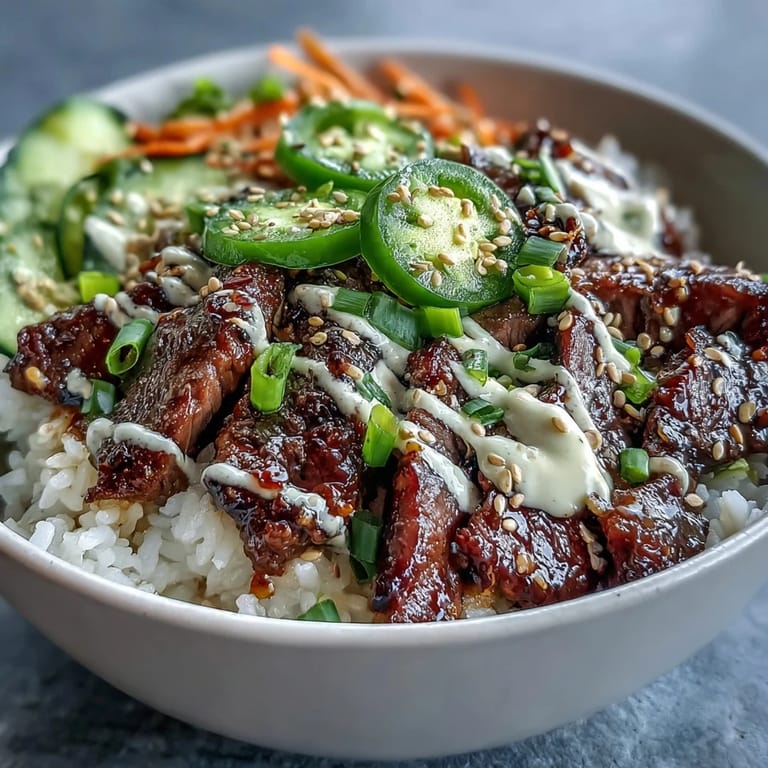
- Divide the warm rice into four bowls, then layer on the beef, drained pickled carrots, cucumber, jalapeños, green onions, and sesame seeds with a little room for the sriracha mayo. Drizzle generously and serve immediately while everything still has temperature contrast.
 Save
Save There's a moment when you're standing at the stove, the beef is browning and everything smells like sesame and ginger and possibility, where you realize this bowl is going to be something people ask you to make again. That's when cooking stops being a task and becomes a small act of care you're offering someone.
The Art of Proper Beef Slicing
The difference between beef that's tender and beef that's disappointing comes down to the knife work, and I learned this the hard way by slicing too thick and wondering why my steak felt chewy. A sharp chef's knife and steady hand matter here, and if you partially freeze the meat for 30 minutes first, it becomes infinitely easier to get those thin, even slices. Think almost-paper-thin, where light passes through a little, and you've got it right.
Balancing Heat and Flavor
The gochujang is optional but it's where the bowl goes from delicious to unforgettable, adding a subtle fermented depth that makes people pause and ask what they're tasting. If you're sensitive to spice, leave it out of the marinade and let people add sriracha to taste, but if you're comfortable with heat, even a teaspoon transforms everything. The sriracha mayo is your secondary heat layer, so you have control over the total spice level depending on your crowd.
Making This Bowl Your Own
The beauty of this bowl is that it's a template rather than a rigid instruction, and some of my favorite versions have come from improvisation based on what was available. I've added soft avocado, used brown rice for earthiness, thrown in edamame for extra protein, or even swapped the mayo for a tahini drizzle when dairy wasn't an option. The core flavors stay strong enough that variations feel like evolution rather than substitution.
- For dairy-free simplicity, use vegan mayo and you won't miss a thing.
- Brown rice or cauliflower rice works beautifully if you want something lighter and more textured.
- Always taste your sriracha mayo before you drizzle it, as heat levels vary between brands.
 Save
Save This bowl has become my go-to when I want to feel like I've nailed something in the kitchen without the stress, and it never fails to make people smile. Make it once and you'll understand why it ended up on repeat in my house.
Recipe FAQs
- → Can I use other cuts of beef?
Flank steak and sirloin work best for quick cooking and tenderness. Ribeye or skirt steak are excellent alternatives. Slice thinly against the grain for the most tender results.
- → How long should I marinate the beef?
Fifteen to twenty minutes is ideal for flavor penetration without the texture becoming mushy. Longer marinating up to 2 hours still works well if you have extra time.
- → Can I make the components ahead?
Pickled carrots taste better after 1-2 days in the refrigerator. The sriracha mayo keeps for up to a week. Beef is best cooked fresh, but you can slice and marinate it the night before.
- → What vegetables can I substitute?
Shredded purple cabbage, radishes, bean sprouts, or sliced bell peppers all work beautifully. Try quick-pickled daikon radish for authentic Korean flair.
- → Is there a lighter rice option?
Brown rice adds nutty flavor and extra fiber. Cauliflower rice dramatically reduces carbohydrates while still absorbing the delicious beef juices and sauces.
- → Can I adjust the spice level?
Reduce or omit jalapeños and sriracha for a mild version. Add extra gochujang to the marinade or include sliced Thai chilies if you prefer more heat.