 Save
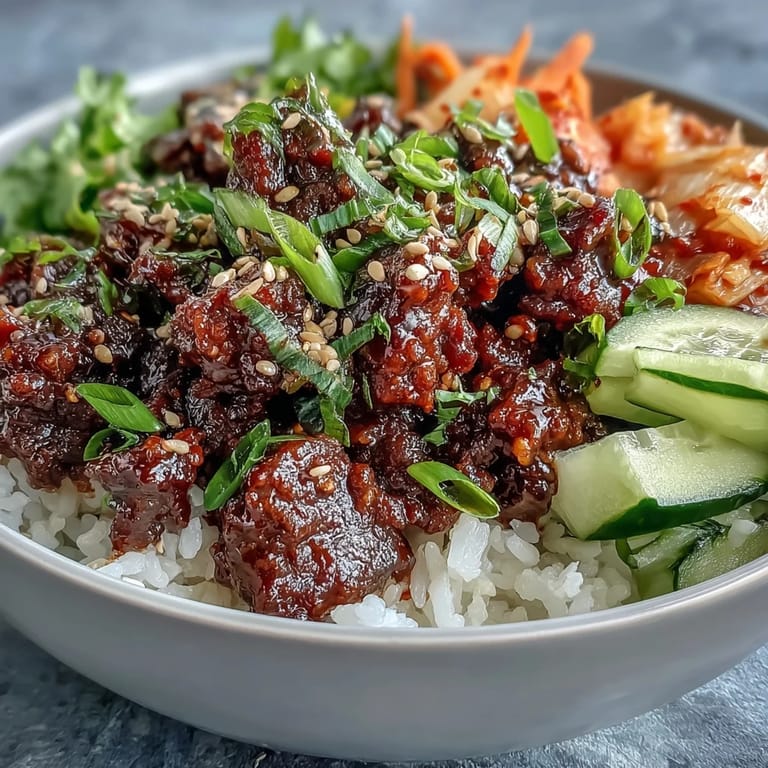
Save My coworker brought a Korean beef bowl to lunch one Tuesday, and I watched her eat it with such quiet satisfaction that I had to ask for the recipe. She laughed and said it wasn't hers, but her roommate's, who made it on nights when everything felt too complicated for anything fancy. That bowl sat with me for weeks—the way the spicy beef mingled with cool pickled vegetables, how the rice soaked up all that umami sauce. I finally made it on a random weeknight when my kitchen felt too small and my energy too low, and somehow this simple dish turned into the most memorable meal I'd cooked in months.
I made this for a dinner party with three friends who all claimed they couldn't cook Korean food at home, and watching their faces light up when they realized how straightforward it was felt like a small victory. One of them asked if I'd trained in Seoul; I just smiled and said no, I'd trained in desperation and a good recipe.
Ingredients
- Lean ground beef (1 lb): The backbone of this bowl, and lean matters because you want the sauce to coat the beef, not swim in grease.
- Gochujang (3 tbsp): This Korean chili paste is non-negotiable; it's spicy but also sweet and funky in a way that grounds the entire dish.
- Soy sauce (2 tbsp): The umami anchor that makes everything taste intentional and complete.
- Brown sugar (1 tbsp): It balances the heat and salt, so don't skip it or you'll end up with something one-dimensional.
- Rice vinegar (1 tbsp for beef, plus 1/2 cup for pickling): This is the brightness that cuts through richness and wakes up your palate with every spoonful.
- Toasted sesame oil (1 tsp): A little goes a long way; it's the finishing touch that whispers quality rather than shouts it.
- Garlic and ginger (3 cloves and 1 tbsp): Fresh is everything here because they perfume the oil and set the tone for the entire dish.
- Carrot and daikon radish for pickling: They soften slightly but stay crisp, and they taste bright and sharp against the heavy spiced beef.
- Kimchi (1 cup chopped): Store-bought is fine, and it adds fermented funk and extra heat without you having to make it yourself.
- Cooked rice (4 cups): White rice is traditional and lets the beef shine, but brown rice works beautifully if that's what you have.
- Toasted sesame seeds (1 tbsp): They add a toasty finish and texture that catches the light on the bowl.
Tired of Takeout? 🥡
Get 10 meals you can make faster than delivery arrives. Seriously.
One email. No spam. Unsubscribe anytime.
Instructions
- Set the vegetables to pickling while you cook:
- Whisk together rice vinegar, sugar, and salt in a small bowl until the sugar dissolves completely. Toss in your julienned carrot and daikon radish and let them sit at room temperature—they'll soften slightly and taste like bright, tangy treasure by the time you need them. This step takes two minutes and makes the bowl feel intentional rather than thrown together.
- Get your aromatics fragrant:
- Heat vegetable oil in a large skillet over medium-high heat until it shimmers, then add minced garlic and grated ginger. You'll smell them almost immediately—that's your signal that they're releasing their essential oils and the pan is ready for the beef. Sauté for about one minute, watching for the moment when they turn pale golden.
- Brown the beef thoroughly:
- Add your ground beef to the fragrant oil and break it up with a wooden spoon as it cooks, about five to six minutes total. You want it cooked through and lightly browned in spots, not gray and steamed; this takes a little patience but rewards you with real flavor. If there's an excessive amount of fat pooling around the beef, drain some of it off so the sauce clings properly.
- Build the sauce around the beef:
- Stir in gochujang, soy sauce, brown sugar, rice vinegar, and sesame oil all at once, then let everything bubble gently for two to three minutes. The sauce will thicken slightly and coat each piece of beef in a glossy, spiced layer that makes your mouth water. Remove from heat and stir in half of your sliced green onions for a fresh note.
- Assemble each bowl with intention:
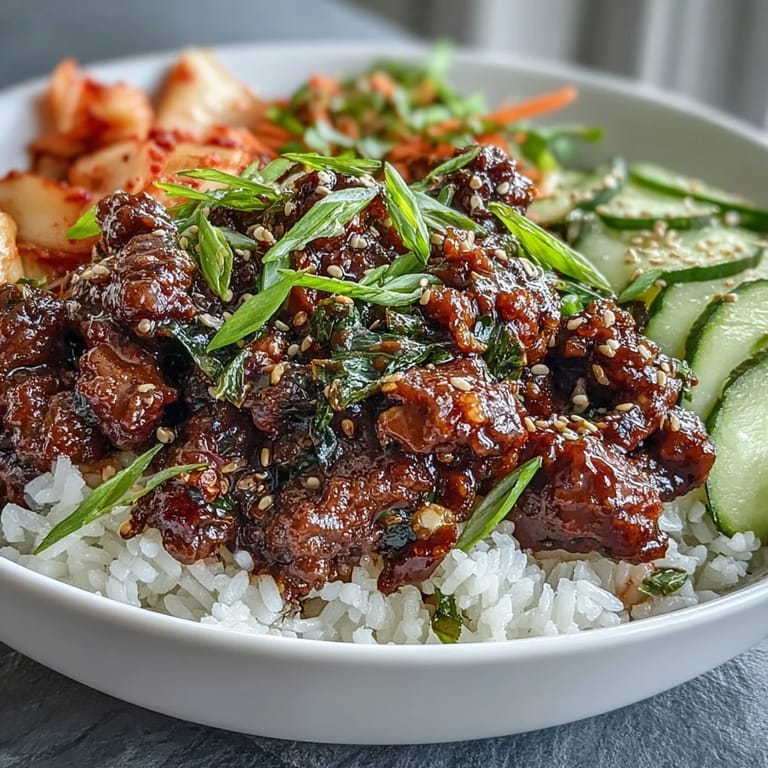
- Start with a bed of warm rice in each of four bowls, then top with a generous portion of the spiced beef. Arrange your pickled vegetables, fresh cucumber slices, radish, and chopped kimchi around the beef like you're composing something beautiful. Scatter the remaining green onions and toasted sesame seeds across the top so every element gets noticed.
 Save
Save I ate this bowl three nights in a row after that first attempt, and each time it tasted different depending on what I was feeling—sometimes I added more kimchi, sometimes I drained the pickled vegetables, once I cracked a raw egg on top and mixed everything together. That's when I realized this wasn't just a recipe; it was a framework for whatever I needed that night.
Why Contrasts Matter in This Bowl
The entire magic of this dish lives in tension—spicy beef against cool cucumber, soft rice against crisp radish, fermented funk against bright vinegar. When you eat it, you're not just tasting one element; you're tasting how each element amplifies or soothes the others. It's why you can't just pile everything together and expect it to work; the arrangement and the balance of textures matter as much as the seasoning.
Customizing for Your Heat Level
Gochujang varies wildly in heat depending on the brand, and some people find even a tablespoon of it overwhelming. If you're uncertain about spice tolerance, start with two tablespoons of gochujang and taste as you go, adding more if you want heat without fear. The brown sugar and vinegar are forgiving enough to balance even extra gochujang, so you can layer in heat gradually and find your comfort zone.
Making This Bowl Your Own
Once you understand the structure—spiced protein, pickled vegetables, fresh garnish, warm rice—you can swap ingredients without guilt. Ground turkey or chicken works beautifully, as does thinly sliced pork or even marinated tofu if you're vegetarian. The technique stays the same; only the protein changes, which means you can make this bowl for weeks without repeating yourself.
- If you have leftover cooked beef, this bowl tastes even better the next day when the flavors have melded together overnight.
- Make a double batch of pickled vegetables and keep them in the fridge for up to five days—they're perfect for adding crunch to scrambled eggs or sandwiches.
- Toasted sesame seeds lose their flavor quickly, so buy small amounts and store them in an airtight container away from light.
 Save
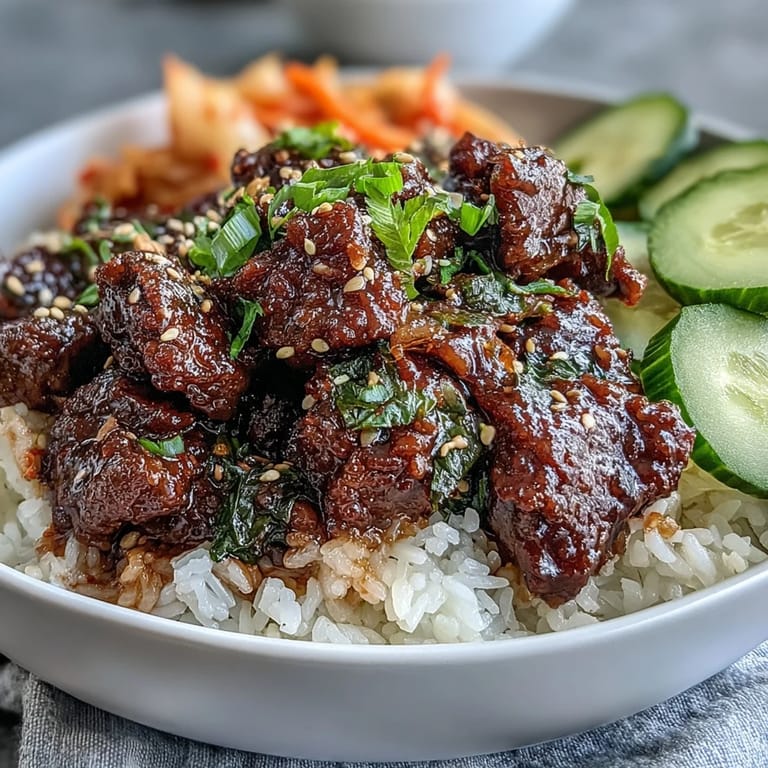
Save This bowl taught me that simple food done thoughtfully tastes better than complicated food done carelessly. Make it this week, and I promise it'll become part of your regular rotation.
Recipe FAQs
- → Can I make the beef ahead of time?
Yes, the seasoned beef can be prepared up to 3 days in advance and stored in an airtight container in the refrigerator. Reheat gently in a skillet over medium heat, adding a splash of water if needed to loosen the sauce. The pickled vegetables also keep well for several days.
- → What can I substitute for gochujang?
If you don't have gochujang, you can substitute with a mixture of red pepper paste, miso, and a touch of honey. Sriracha mixed with a small amount of miso paste also works, though the flavor profile will be slightly different. For authentic results, consider purchasing gochujang at an Asian market or online.
- → Is this dish very spicy?
The spice level is moderate—gochujang provides a gentle heat that's balanced by sweetness from brown sugar and acidity from rice vinegar. You can easily adjust the heat by using less gochujang or adding more for spice lovers. The cool, pickled vegetables also help temper the warmth.
- → Can I use different proteins?
Absolutely. Ground turkey, chicken, or even crumbled tofu work beautifully with the gochujang sauce. Cooking times may vary slightly—poultry should reach an internal temperature of 165°F. For a vegetarian version, use plant-based ground meat or extra-firm tofu crumbles.
- → How do I quick-pickle the vegetables?
Combine rice vinegar, sugar, and salt in a bowl, stirring until dissolved. Add thinly sliced carrots and daikon radish, toss to coat, and let sit at room temperature for at least 15 minutes while you prepare the beef. The vegetables will absorb the marinade, becoming tangy and crisp without hours of traditional pickling.
- → What other toppings work well?
Fried or soft-boiled eggs add richness and protein. Sliced avocado, fresh cilantro, or bean sprouts provide extra texture and freshness. You could also add seaweed salad, marinated spinach, or sliced jalapeños for additional layers of flavor and color.