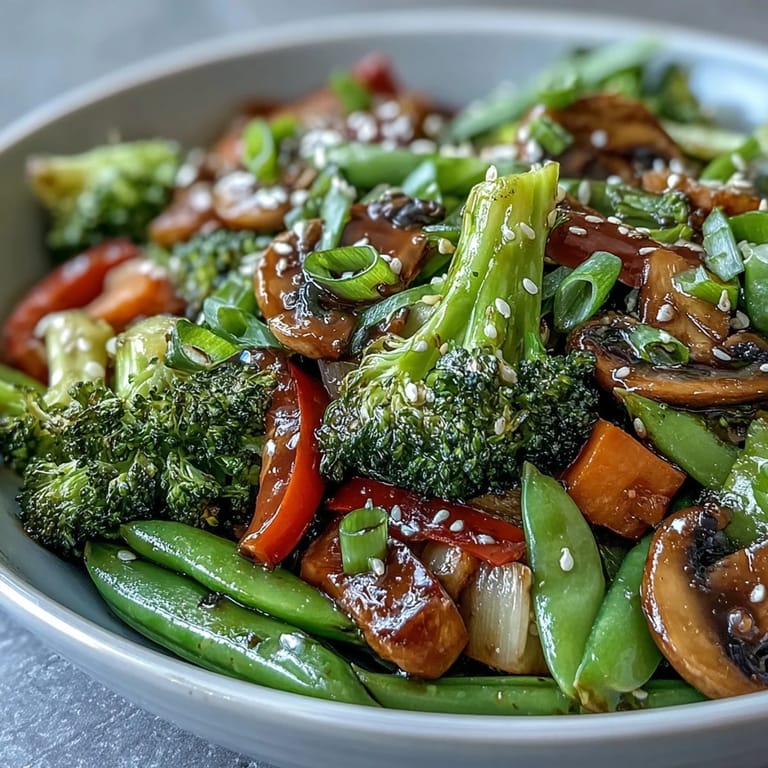
 Save
Save There's this moment in my kitchen when the wok is screaming hot and you toss in ginger—the smell hits you like a wake-up call, sharp and alive. That's when I knew this stir-fry had to become a regular thing. It happened one Tuesday evening when I had twenty minutes and a drawer full of vegetables that needed rescuing. No complicated techniques, just heat, motion, and the kind of honest cooking that makes you feel like you actually know what you're doing.
My partner walked in mid-stir-fry last week and just stood there breathing in the steam rising from the wok. He didn't say anything, just smiled and grabbed plates. That's when cooking stops being a task and becomes an invitation—something about the sizzle and the aroma that makes people want to stick around.
Ingredients
- Broccoli florets (1 cup): Cut them bite-sized so they cook evenly and catch the sauce beautifully; larger pieces stay too crunchy in the center.
- Sliced carrots (1 cup): Cut them on a slight bias—it's not just prettier, it exposes more surface area to absorb flavor and heat.
- Red bell pepper (1, sliced): Sweet and slightly smoky when kissed by high heat; adds genuine color that makes people want to eat this.
- Snap peas (1 cup, trimmed): These are your texture anchor; they stay crisp and tender simultaneously if you don't overcook them.
- Yellow onion (1 small, thinly sliced): The thin slice matters because onions need time to soften, and thin pieces cook faster without becoming transparent.
- Sliced mushrooms (1 cup): They absorb the sauce and release their own umami; cremini or button mushrooms work equally well.
- Fresh ginger (2 tablespoons, finely grated): Grate it just before cooking—bottled ginger tastes flat by comparison, and the fresh stuff is what wakes everything up.
- Garlic (3 cloves, minced): Mince fine enough that it dissolves into the oil; chunky garlic turns bitter under high heat.
- Soy sauce (3 tablespoons): Use tamari if gluten matters to you, but quality soy sauce makes a genuine difference in the final flavor.
- Sesame oil (1 tablespoon): This isn't cooking oil—it's a flavor bomb added at the end; too much becomes overwhelming.
- Vegetable oil (1 tablespoon): Reaches higher temperatures than sesame oil alone; the combination gives you heat and flavor.
- Rice vinegar (1 tablespoon): Cuts through richness and brightens everything; white vinegar feels too sharp by comparison.
- Maple syrup or honey (1 teaspoon): A touch of sweetness balances the salty and acidic notes; skip it and the sauce tastes one-dimensional.
- Crushed red pepper flakes (1/4 teaspoon, optional): Add these only if you want heat; some nights I leave them out entirely.
- Green onions (2, sliced): These finish the dish with fresh brightness; add them after cooking so they don't wilt completely.
- Toasted sesame seeds (1 tablespoon): Buy them already toasted if you can find them; toasting your own takes two minutes but changes everything.
Tired of Takeout? 🥡
Get 10 meals you can make faster than delivery arrives. Seriously.
One email. No spam. Unsubscribe anytime.
Instructions
- Make your sauce first:
- Whisk together soy sauce, rice vinegar, maple syrup, and red pepper flakes in a small bowl and leave it on the counter. This way you're not scrambling when the wok gets busy.
- Get your oils hot:
- Pour vegetable oil and sesame oil into a large skillet or wok and set the heat to medium-high; you'll know it's ready when a piece of ginger makes it immediately sizzle and dance.
- Bloom the ginger and garlic:
- Once the oil shimmers, add ginger and garlic and stir constantly for about 30 seconds—this is quick, but it fills the room with incredible fragrance. Stop before they brown or they'll taste bitter.
- Start with the slow vegetables:
- Toss in the onion, carrots, and broccoli all at once; these need the most time. Stir constantly for 2–3 minutes, making sure everything touches the hot pan.
- Add the quick-cooking vegetables:
- Throw in the bell pepper, snap peas, and mushrooms and keep stirring for another 3–4 minutes. You're looking for tender but still crisp—that moment right before they go soft.
- Coat everything with sauce:
- Pour in your prepared sauce and toss everything together, making sure every piece gets coated. Cook for another 1–2 minutes and the sauce should thicken slightly.
- Finish and serve:
- Remove from heat, sprinkle with green onions and sesame seeds, and serve immediately while everything is still steaming.
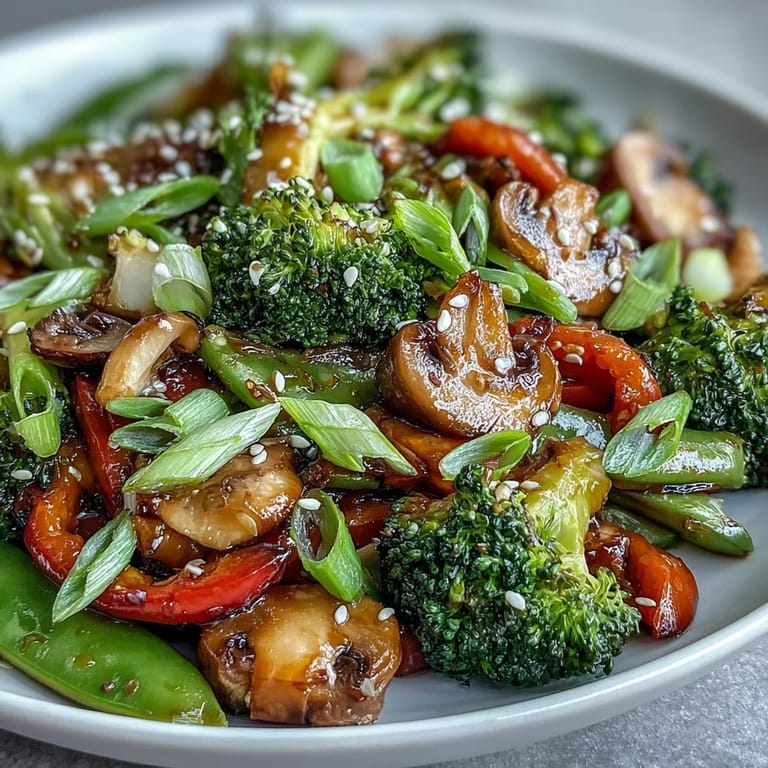 Save
Save My sister brought her new partner to dinner and I made this stir-fry almost without thinking. He went back for seconds and asked for the recipe the next morning, which somehow meant more than any compliment. That's the moment I realized this isn't just weeknight food—it's the kind of dish that makes people feel welcome.
The Ginger Advantage
Fresh ginger is honestly the backbone of this entire dish, and I learned this through trial and error. Once I tried powdered ginger to save time and the whole thing tasted flat and one-dimensional—like I'd missed the entire point. Now I grate ginger on a microplane (which gives you a finer texture) or use the box grater's smallest holes, and the difference is like night and day.
Serving and Pairing Ideas
This stir-fry doesn't need much to feel complete—jasmine rice is my default because it's gentle and absorbs the sauce naturally. Brown rice works if you want nuttier notes, and rice noodles turn it into something entirely different but equally satisfying. Some nights I serve it over nothing at all and just eat it straight from the wok with chopsticks standing at the counter.
Customization and Storage
The beauty of stir-fries is that you're not locked into specific vegetables—use what's in your crisper drawer or what looks good at the market. Winter calls for heartier vegetables like cabbage and bok choy, while summer invites zucchini and green beans. Leftovers keep in the refrigerator for three days and reheat beautifully in a hot pan; add a splash of water to restore the sauce's silky texture.
- Add tofu cubes or crumbled tempeh if you want extra protein without changing the flavor profile.
- Make it spicier by increasing red pepper flakes or adding a dash of sriracha at the end.
- For meal prep, chop all vegetables the morning of cooking but keep them separate from the sauce until you stir-fry.
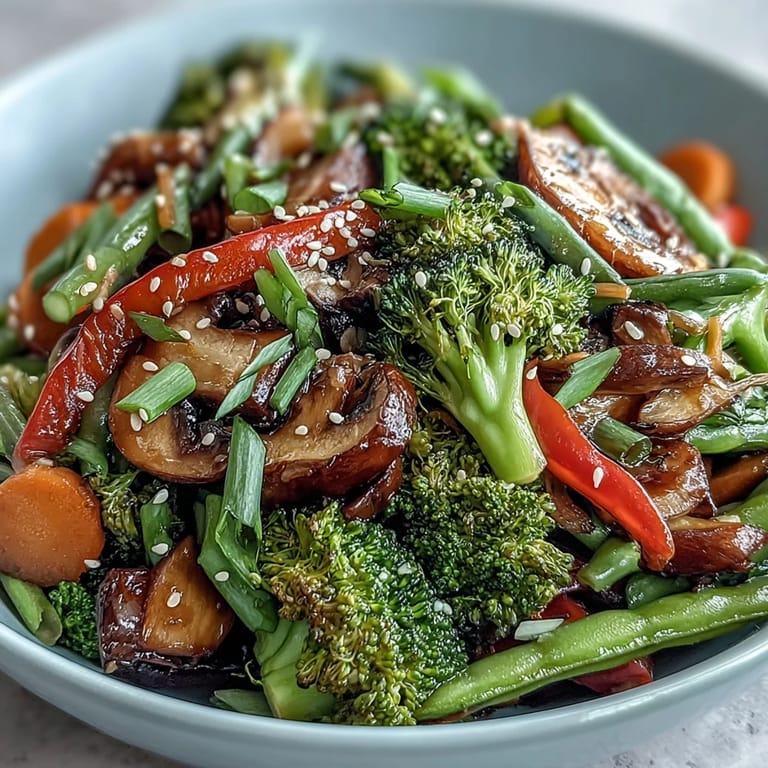 Save
Save This stir-fry has become the recipe I make when I want something that tastes intentional but doesn't demand hours in the kitchen. It's the kind of cooking that reminds you why you enjoy being in the kitchen at all.
Recipe FAQs
- → Can I make this gluten-free?
Yes, simply substitute regular soy sauce with tamari, which is naturally gluten-free. All other ingredients are already gluten-free.
- → What other vegetables work well in this stir-fry?
Bok choy, zucchini, baby corn, water chestnuts, snow peas, and bean sprouts all complement the ginger-soy flavor profile beautifully.
- → How do I prevent vegetables from becoming mushy?
Keep the heat high and stir-fry quickly. Add vegetables in stages, starting with harder ones like carrots and broccoli, then adding softer vegetables like snap peppers and snap peas later.
- → Can I add protein to make it more filling?
Absolutely. Cubed tofu, tempeh, or edamame work perfectly. Cook the protein separately before adding it back in step 6 with the sauce.
- → How should I store leftovers?
Store in an airtight container in the refrigerator for up to 3 days. Reheat gently in a skillet or microwave, though vegetables will soften slightly.