 Save
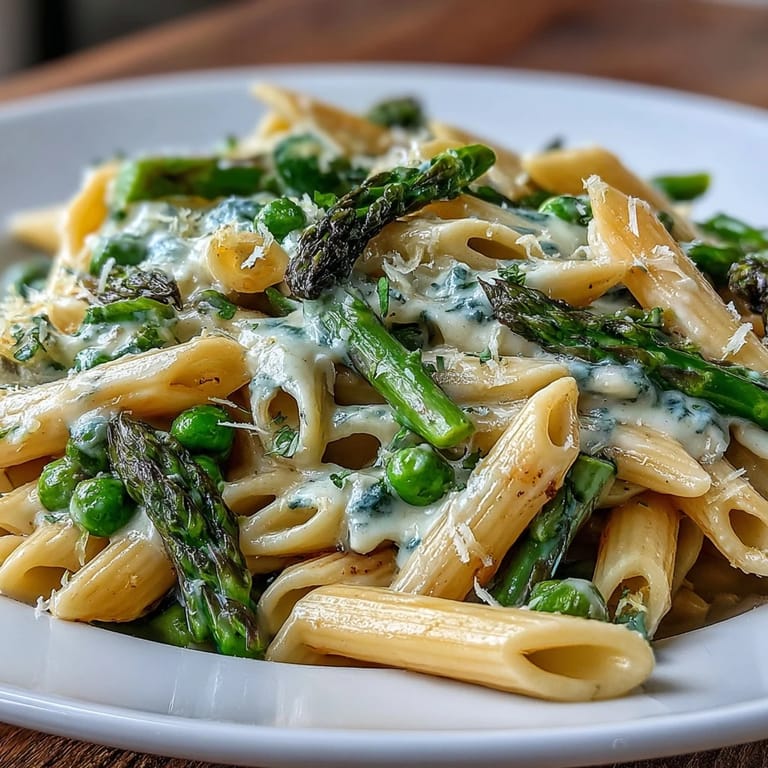
Save The first warm Saturday in April, I opened my fridge to find three different bags of spring vegetables I'd bought with good intentions but no plan. Asparagus from the farmers market, a bag of frozen peas my neighbor had passed along, and green beans I'd grabbed on sale. I had a box of penne in the pantry and a hunk of Parmesan that needed using. What started as pantry roulette turned into one of those accidental weeknight dinners that I now make every spring without fail.
I made this for my sister when she came over one evening after a long day at work. She took one bite, closed her eyes, and said it tasted like eating sunshine. I laughed, but I knew exactly what she meant. There's something about the bright green vegetables, the hint of lemon, and the way the Parmesan melts into the cream that feels like the antidote to a grey, exhausting week. We ate it straight from the skillet with a bottle of cold white wine between us, and she asked me to text her the recipe before she even left.
Ingredients
- Penne pasta (350 g): The ridges and tube shape grab onto the creamy sauce better than smooth pasta, and it holds up well when tossed with chunky vegetables.
- Asparagus (200 g, trimmed and cut): Trim the woody ends by snapping them where they naturally break, then cut into bite sized pieces so they cook evenly and twirl easily with the pasta.
- Fresh or frozen peas (150 g): Frozen peas work beautifully here and save you the trouble of shelling, plus they stay sweet and pop with color.
- Green beans (150 g, trimmed and cut): Cut them the same size as your asparagus so everything finishes cooking at the same time.
- Olive oil (2 tbsp): Use a decent quality olive oil since it's the base of your sauce and you'll taste it in every bite.
- Garlic (3 cloves, finely minced): Mince it small so it melts into the sauce rather than sitting in chunks, and watch it closely so it doesn't burn and turn bitter.
- Vegetable broth (60 ml): This loosens the sauce and adds a savory backbone without making it too rich.
- Heavy cream (120 ml): It makes the sauce luxurious and silky, but you can use half and half if you want something a little lighter.
- Parmesan cheese (60 g, freshly grated): Grate it yourself from a block, the pre grated stuff doesn't melt as smoothly and lacks that nutty, salty punch.
- Black pepper (1/2 tsp): Freshly ground pepper adds a gentle heat that balances the richness of the cream.
- Salt (1/4 tsp or to taste): Start with less since the Parmesan is salty, then adjust at the end.
- Lemon zest (from 1 lemon): The zest brings bright, floral citrus notes that wake up the whole dish.
- Lemon juice (1 tbsp): A squeeze of juice at the end cuts through the cream and makes everything taste fresher.
- Fresh basil or parsley (for garnish): A handful of chopped herbs on top adds color and a little herbal brightness that ties it all together.
Tired of Takeout? 🥡
Get 10 meals you can make faster than delivery arrives. Seriously.
One email. No spam. Unsubscribe anytime.
Instructions
- Boil the pasta:
- Bring a large pot of salted water to a rolling boil, add the penne, and cook until al dente according to the package directions. Before draining, scoop out about half a cup of the starchy pasta water and set it aside, it's your secret weapon for making the sauce silky.
- Sauté the garlic:
- While the pasta cooks, heat the olive oil in a large skillet over medium heat, then add the minced garlic and cook for about a minute, stirring constantly, until it smells amazing but hasn't turned brown.
- Cook the vegetables:
- Toss in the asparagus, green beans, and peas, and sauté for 3 to 4 minutes, stirring occasionally, until they're just tender and still vibrantly green. You want them to have a little bite left, not mushy.
- Add the broth:
- Pour in the vegetable broth and let it simmer for about 2 minutes, which helps the vegetables finish cooking and creates a flavorful base for your sauce.
- Make the creamy sauce:
- Lower the heat and stir in the heavy cream and grated Parmesan, whisking gently until the cheese melts completely and the sauce becomes smooth and glossy.
- Toss with pasta:
- Add the drained penne to the skillet and toss everything together, adding splashes of the reserved pasta water as needed until the sauce coats every piece of pasta and vegetable in a creamy, luscious layer.
- Season and finish:
- Stir in the black pepper, salt, lemon zest, and lemon juice, then taste and adjust the seasoning. The lemon should be noticeable but not overpowering, just enough to brighten the whole dish.
- Serve:
- Divide the pasta among bowls, then top with extra grated Parmesan and a generous sprinkle of chopped fresh basil or parsley.
 Save
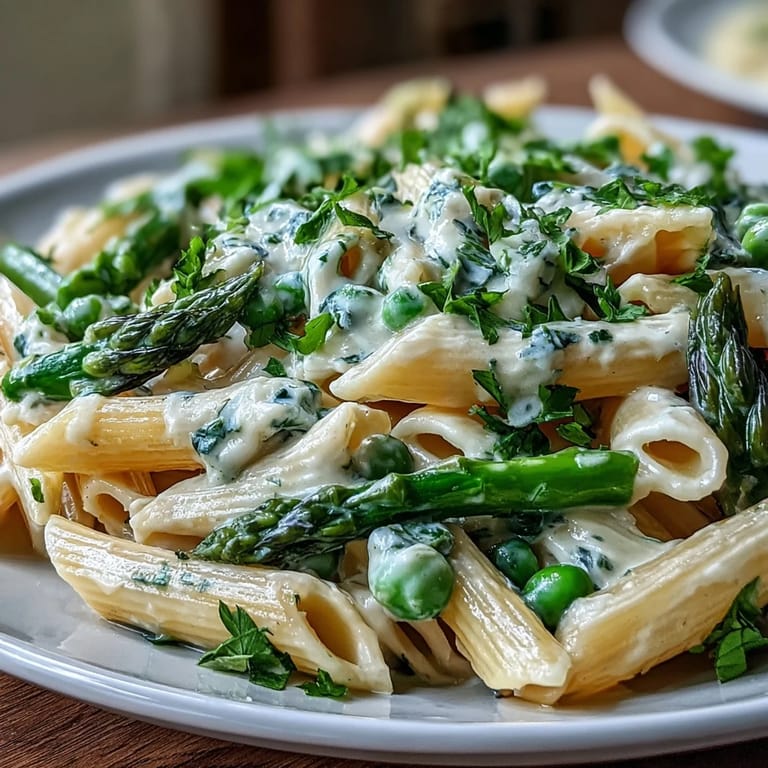
Save One spring evening, I made this for a friend who had just moved into a new apartment and didn't have much in her kitchen yet. I brought the ingredients over and we cooked it together in her tiny galley kitchen, laughing as we bumped into each other. When we sat down to eat, she said it was the first meal that made her new place feel like home. That's what I love most about this dish, it doesn't need a special occasion, it just needs good company and a little bit of hunger.
How to Pick the Best Spring Vegetables
When you're at the market, look for asparagus spears that are firm and bright green with tightly closed tips, avoid any that look dried out or slimy at the bottom. Green beans should snap cleanly when you bend them, and if they're bendy or have brown spots, skip them. Fresh peas in the pod are a treat if you have time to shell them, but frozen peas are picked at peak sweetness and work just as well. The key is to cut everything into similar sized pieces so they all finish cooking at the same time and you don't end up with mushy peas and crunchy asparagus.
Making It Your Own
This recipe is endlessly adaptable depending on what you have in your fridge or what looks good at the store. I've swapped in zucchini, snap peas, broccoli florets, and even shaved Brussels sprouts with great results. If you want to make it heartier, toss in some cooked chicken, shrimp, or white beans. For a lighter version, use half and half instead of heavy cream, or skip the cream entirely and rely on pasta water and Parmesan to create a thinner but still flavorful sauce. You can also add a pinch of red pepper flakes with the garlic if you like a little heat, or stir in fresh spinach at the end for extra greens.
Storing and Reheating Leftovers
Leftovers keep well in an airtight container in the fridge for up to three days, though the pasta will soak up some of the sauce as it sits. When you reheat it, add a splash of broth, cream, or even just water to loosen everything up, then warm it gently in a skillet over low heat, stirring often. The microwave works in a pinch, but the stovetop brings back that silky texture better. I've even eaten it cold straight from the fridge as a sort of pasta salad, and it's honestly still delicious.
- Store in a sealed container and keep it toward the back of the fridge where it stays coldest.
- Reheat on the stovetop with a little extra liquid to bring the sauce back to life.
- If you're meal prepping, consider cooking the pasta just shy of al dente so it doesn't turn mushy when reheated.
 Save
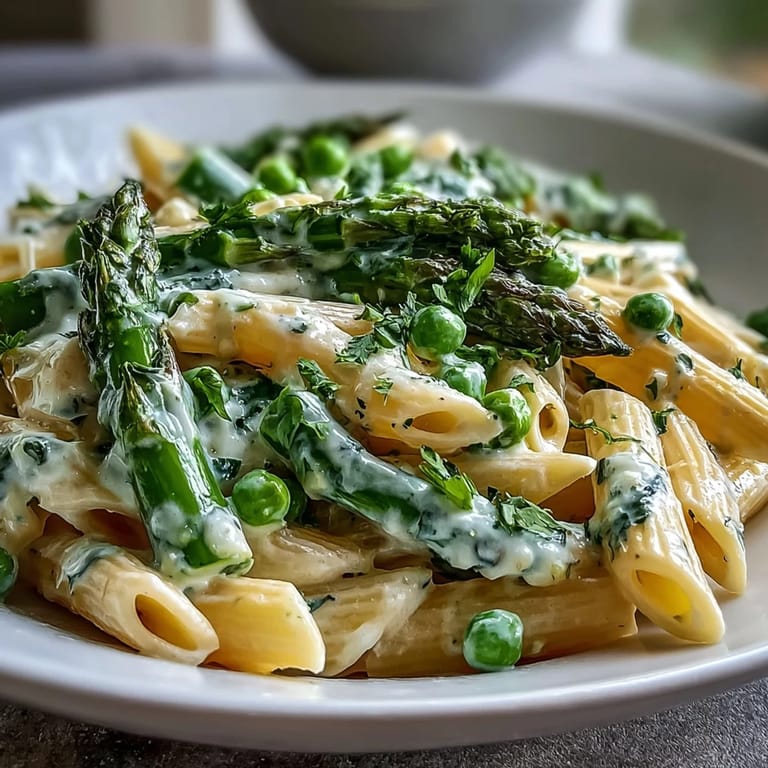
Save This pasta has become my go to answer when I want something that feels indulgent but doesn't require a trip to three different stores or an afternoon in the kitchen. It's proof that the best meals don't have to be complicated, just made with a little attention and whatever the season has to offer.
Recipe FAQs
- → How do I prevent the vegetables from becoming mushy?
Sauté the vegetables only until just tender, about 3-4 minutes, keeping them bright green. Cut them into uniform pieces so they cook evenly and maintain their texture when combined with the sauce.
- → Can I prepare this dish ahead of time?
This dish is best served immediately for optimal texture and temperature. However, you can prep ingredients in advance—trim and cut vegetables, mince garlic, and grate cheese. Assemble just before serving.
- → What if I don't have fresh asparagus or peas?
Frozen vegetables work beautifully in this dish. Peas are frozen at peak ripeness, and frozen asparagus and green beans maintain excellent texture. Use them directly without thawing for best results.
- → How can I make this sauce richer or lighter?
For richness, increase cream slightly or add more Parmesan. For a lighter version, substitute half-and-half for heavy cream or use a combination of broth and cream in equal parts.
- → Why should I reserve pasta water?
Starchy pasta water helps emulsify the sauce, creating a silky coating that clings to the pasta. It also allows you to adjust sauce consistency—add more for a lighter sauce, less for a thicker one.
- → How do I store leftovers and reheat them?
Store in an airtight container for up to two days. Reheat gently in a skillet over low heat with a splash of broth or cream to restore the sauce's silky texture. Avoid microwaving, which can make pasta tough.